The Rocket Equation has a term that is the rocket motor efficiency and a term that is the mass ratio. In a pressure fed system the biggest component of that mass ratio is the tank.
If I could make a tank identical to a 2L soda bottle only 5 to 10 times bigger that would be almost ideal. I could probably find a mechanism, to join a bunch 2L soda bottles and I may pursue that, but I'm also going to try my hand at composite tanks. Toward that end I made mold forms for a 6" diameter cylindrical test tank mold. I heated it up and waxed it with mold release and setup the vacuum bag etc.. got ready for my first composite test part.
I have something non-rocket to do tonight, but tomorrow I hope to try making my first composite part since the solar plane project.
The first tanks will have glued Mylar liners that are not H2O2 safe, but the flight tanks will have mylar/PET liners with no glue. The jury is still out if the tanks will be seamed via vacuum heat, sonic welding, or RF welding.In addition to the liner I also want the tank to be chemically resistant to the H2O2. I want any liner failures to not be immediately catastrophic.
I'm getting a bunch of samples and setting up to do compatibility testing next weekend out at FAR. I'm testing glass, kevlar and carbon fibers with normal epoxy, vinyl ester and special chemically resistant vinyl ester resins. My gut says that plain E glass with the chem compatible resin will be fine, I'm almost certain that carbon with epoxy won't be. I hope the Kevlar and chem resistant resin also work as the kevlar is a bunch stronger than the glass.
Its a multi part test, start with 30% and work your way up to heated 85 or 90%. Anything past 50% really has to be done remotely. I'm planning to soak samples in PET soda bottle bottoms. sitting in hot water on a hot plate. The sample will have a string and pulley so I can pull the sample out of the solution remotely and shoot it with the 243. I could set up some kind of hammer and anvil test, but I worry that if it goes bang, the hammer becomes a projectile.
I figure I'll get the preliminary screening done this weekend and the samples that pass will get the hotplate test in two weeks.
Monday, October 04, 2010


Tuesday, September 28, 2010
A few ideas and loose ends
This week I learned that the NASA Nanosat prize is funded, (I thought it was a proposal not a funded prize.) So this clearly puts a bulls eye on a project target. This process starts with a notional vehicle and works backwards from the last stage. With a 1Kg payload I think that I can build a three stage launcher with a gross liftoff mass of less than 1000lbs.
To do something on this scale every gram matters. I'm starting to designbthe best 3rd stage I can and works backwards... (If you do a good enough job you only need two stages)
One needs:
Efficent light high expansion motor. Working on small motors via the DMLS project.
Really light tanks.....I've purchased all the large beverage containers I can find and am weighing and pressure testing them. So far the best tank is a 2l soda bottle. 100+PSI and mass ratio of > 40. A single soda bottle is not really enough. Any scheme to group them together is heavier than the bottle. So I'm looking at maybe fabricating my own tanks. The idea H2O2 tank would be mylar lined (mylar is another version of PET like in soda bottles) with chemically compatible resins and kevlar. Normal Epoxy and normal Carbon fiber are not happy with H2O2. All the tanks at this scale are up against minimum gage issues so whatever pressure you get in the tank will be more than really needed. In concept these seem very similar to the H2O2 tanks shown by Richard Speck of Micro-space at the 2007 LLC. I've got most of the materials to try this on the way. The biggest unknown issue is how to build the liner. If I can make the process in patent #3661675work that would be ideal.
Really light valves and actuators... probably all based on brushless model airplane servos. one can get lighter brushed parts, but must trade against the requirement to put them in a pressure box and the smallest brushless ones seem to be a win.
Guidance.... more on that later...
Regulation... This one is hard because the regulatory framework that applies to orbital launches is tailored toward something like a big Atlas. My current concept is to make the 2nd and 3rd stages really light and fluffy. Almost all plastic, including the valves and plumbing. Only the thrust chamber will be non-plastic. The first stage will probably be metal. The concept is to launch off shore so that thrid party safety from the first stage is constrained by physics and the 2nd and 3rd stages are too light to survive reentry. The real trick will be proving that and path taken by the 2nd stage will either burn up or land within the 1st stage constrained by physics zone. IE if it shoots straight back down its not going so fast so it might burn up. If it flies perfectly by the end of its burn then its going to fast to survive reentry. The question is what happens between these two zones. My nominal vehicle meets all of the amateur limits except the no orbit allowed rule. IE less than 200Klb/sec and orbital altitude less than 150km. (Rules say you only need to go around once.) more rambling to follow as I figure things out.
Anyone in SoCal with access to a 14" diameter 20" long vacuum oven that I could use to try the process described in the patent above would be really helpful.
To do something on this scale every gram matters. I'm starting to designbthe best 3rd stage I can and works backwards... (If you do a good enough job you only need two stages)
One needs:
Efficent light high expansion motor. Working on small motors via the DMLS project.
Really light tanks.....I've purchased all the large beverage containers I can find and am weighing and pressure testing them. So far the best tank is a 2l soda bottle. 100+PSI and mass ratio of > 40. A single soda bottle is not really enough. Any scheme to group them together is heavier than the bottle. So I'm looking at maybe fabricating my own tanks. The idea H2O2 tank would be mylar lined (mylar is another version of PET like in soda bottles) with chemically compatible resins and kevlar. Normal Epoxy and normal Carbon fiber are not happy with H2O2. All the tanks at this scale are up against minimum gage issues so whatever pressure you get in the tank will be more than really needed. In concept these seem very similar to the H2O2 tanks shown by Richard Speck of Micro-space at the 2007 LLC. I've got most of the materials to try this on the way. The biggest unknown issue is how to build the liner. If I can make the process in patent #3661675work that would be ideal.
Really light valves and actuators... probably all based on brushless model airplane servos. one can get lighter brushed parts, but must trade against the requirement to put them in a pressure box and the smallest brushless ones seem to be a win.
Guidance.... more on that later...
Regulation... This one is hard because the regulatory framework that applies to orbital launches is tailored toward something like a big Atlas. My current concept is to make the 2nd and 3rd stages really light and fluffy. Almost all plastic, including the valves and plumbing. Only the thrust chamber will be non-plastic. The first stage will probably be metal. The concept is to launch off shore so that thrid party safety from the first stage is constrained by physics and the 2nd and 3rd stages are too light to survive reentry. The real trick will be proving that and path taken by the 2nd stage will either burn up or land within the 1st stage constrained by physics zone. IE if it shoots straight back down its not going so fast so it might burn up. If it flies perfectly by the end of its burn then its going to fast to survive reentry. The question is what happens between these two zones. My nominal vehicle meets all of the amateur limits except the no orbit allowed rule. IE less than 200Klb/sec and orbital altitude less than 150km. (Rules say you only need to go around once.) more rambling to follow as I figure things out.
Anyone in SoCal with access to a 14" diameter 20" long vacuum oven that I could use to try the process described in the patent above would be really helpful.
Wednesday, September 22, 2010
More Printed Motor news...
The DMLS machine that is most common is an EOS270. The company that makes these machines has recently started adding some new materials. The new Material I'm most interested is Aluminum for chambers, and maybe Inconel 718 for a possible turbo pump.
I'd gotten some chamber quotes a year or so ago and it was still too expensive. When I had GPI quote my design again this year it was half of what last years quote was and I ordered the part on the spot. (In Stainless) GPI was also very helpful in making geometry suggestions that woul d improve the quality of the resultant part.
After placing this order I thought I'd do some more price research and sent the same file to Morris Tech to quote. The response from Morris was very competitive and its clear that this industry is seeing significant price declines. (Neither vendor knows what the other quoted) I hope its a sustainable trend and not a bloody battle to bankruptcy.
I really don't like beating vendors against each other because any long term relationship needs to be win-win and you can't do that by abusing your vendors. While it might be tempting to beat vendors prices against each other, its not some thing I do.
I also asked both Morris and GPI about the availability of Aluminum.
GPI indicated that they would soon be running Aluminum and Morris indicated that they had already run some Aluminum parts and that in the next few weeks they would be running some more aluminum test parts.
Since I was doing interesting stuff as an individual inventor not a big corporation Morris offered me the chance to add a single part to the Aluminum test run for approximately their direct cost. Its an offer I can't refuse. So I will soon have small DMLS chambers in two materials!
The Aluminum Motor is actually a bit bigger than the stainless motor as it needs to be cooled the whole length with a stainless cat pack support thermally isolated from the cooled aluminum chamber as a sleeve inside.
So if you need DMLS parts there are at least two really awesome DMLS vendors in the U.S.
http://www.morristech.com/
and
http://gpiprototype.com/
I'd gotten some chamber quotes a year or so ago and it was still too expensive. When I had GPI quote my design again this year it was half of what last years quote was and I ordered the part on the spot. (In Stainless) GPI was also very helpful in making geometry suggestions that woul d improve the quality of the resultant part.
After placing this order I thought I'd do some more price research and sent the same file to Morris Tech to quote. The response from Morris was very competitive and its clear that this industry is seeing significant price declines. (Neither vendor knows what the other quoted) I hope its a sustainable trend and not a bloody battle to bankruptcy.
I really don't like beating vendors against each other because any long term relationship needs to be win-win and you can't do that by abusing your vendors. While it might be tempting to beat vendors prices against each other, its not some thing I do.
I also asked both Morris and GPI about the availability of Aluminum.
GPI indicated that they would soon be running Aluminum and Morris indicated that they had already run some Aluminum parts and that in the next few weeks they would be running some more aluminum test parts.
Since I was doing interesting stuff as an individual inventor not a big corporation Morris offered me the chance to add a single part to the Aluminum test run for approximately their direct cost. Its an offer I can't refuse. So I will soon have small DMLS chambers in two materials!
The Aluminum Motor is actually a bit bigger than the stainless motor as it needs to be cooled the whole length with a stainless cat pack support thermally isolated from the cooled aluminum chamber as a sleeve inside.
So if you need DMLS parts there are at least two really awesome DMLS vendors in the U.S.
http://www.morristech.com/
and
http://gpiprototype.com/
Saturday, September 18, 2010
Why the motor has horns.
If you look at this post from July. You will see how the finished motor will look. Rather then spend lots of $$ making the simple upper section I only had the lower part printed with DMLS. The upper section where the cat pack will go is fabricated in the normal way from a sanitary fitting. It will and then be welded to the motor bottom.
The horns sticking out the side are the fuel feed. The fuel goes in the curved part and a 8-32 Set screw with a orifice drilled in it goes down the straight section. Then the end of the straight section gets plugged. You can buy predrilled orfices in 8-32 set screws from Mcmaster Car.
Here is a picture of all the bits before welding:
The two small parts are the machined elbows to connect the vertical feed tubes with the Chamber top.
The horns sticking out the side are the fuel feed. The fuel goes in the curved part and a 8-32 Set screw with a orifice drilled in it goes down the straight section. Then the end of the straight section gets plugged. You can buy predrilled orfices in 8-32 set screws from Mcmaster Car.
Here is a picture of all the bits before welding:

The two small parts are the machined elbows to connect the vertical feed tubes with the Chamber top.
Wednesday, September 15, 2010

Sunday, September 12, 2010
Pressure Fed Upper Stage.
I've been doing some calculations on what an upper stage for the 1Kg Nanosat launcher would look like. One of the interesting twists is that if the motor only has to run in vacuum then it's ISP is almost independent of chamber pressure. So for any small launcher you are going to have minimum gauge problems long before you hit the minimum optimum tank wall thickness. This opens the possibility for tanks with things like 3L soda bottles and PVC valves. It makes me wonder why Space X went with the turbo pump 2nd stage for the F9. a lot of complexity for very little gain? Maybe just because they had one that was approximately the right size.
Wednesday, September 08, 2010
Some progress...
This weekend I worked on cleaning up my Garage.
I cleared the floor, two junk Tables and a cart. Everything I cleaned up now has a place. I still have piles on one bench and one cabinet. When those are done I need to start the task of going through all the storage containers, drawers etc.. and purge stuff I'm never going to use. A little bit more room would be really helpful. All in all I feel a lot better about the garage after putting three full days into it.
My Son and some of his friends went to burning man so just as I start to get a handle on the garage the truck comes back from Burning man filling the garage with dust covered stuff..... they have been working evenings getting it cleaned up so I can't really complain.
I tried to fill the porosity of my printed motor with some solder and I just could not get good penetration. It didn't stick to the stainless even using some fairly aggressive acid flux. As a result I redid my printed motor design for the DMLS process and had it quoted by GPI prototype. Their price was about 4X the Shapeways price, but the part is thinner and needs a lot less welding. (Its also about 2/3 of what I though it would be.) I ordered it Tuesday, so we should get it some time in the next two weeks. The parts on the DMLS "showcase" always look incredible. I asked them to give me the best possible price so please give it to be raw off the machine. It will be interesting to see the raw finish.
I cleared the floor, two junk Tables and a cart. Everything I cleaned up now has a place. I still have piles on one bench and one cabinet. When those are done I need to start the task of going through all the storage containers, drawers etc.. and purge stuff I'm never going to use. A little bit more room would be really helpful. All in all I feel a lot better about the garage after putting three full days into it.
My Son and some of his friends went to burning man so just as I start to get a handle on the garage the truck comes back from Burning man filling the garage with dust covered stuff..... they have been working evenings getting it cleaned up so I can't really complain.
I tried to fill the porosity of my printed motor with some solder and I just could not get good penetration. It didn't stick to the stainless even using some fairly aggressive acid flux. As a result I redid my printed motor design for the DMLS process and had it quoted by GPI prototype. Their price was about 4X the Shapeways price, but the part is thinner and needs a lot less welding. (Its also about 2/3 of what I though it would be.) I ordered it Tuesday, so we should get it some time in the next two weeks. The parts on the DMLS "showcase" always look incredible. I asked them to give me the best possible price so please give it to be raw off the machine. It will be interesting to see the raw finish.
Sunday, September 05, 2010
An Orbital Vehicle Part 1
What does it take to build an orbital vehicle?
My interest is in something really small say a nano sat launcher. This is going to require more performance than a larger rocket as air drag has so much more effect. I'll start with John Whiteheads paper. For a LOX Hydrocarbon stage to get to a 200Km orbit he says we need ~9500 m/sec Delta V and for a 1T vehicle. This paper claims this was a simple analysis, and I always like to cross check. From the Falcon 1 Users guide table 2-1 we get the following:
Extrapolating in the "How Small" paper we get about 9250 for a Falcon 1 sized vehicle. So I have a source to give me some target numbers and have independently verified that the numbers are not wildly off. So we need to design a vehicle with 9700 m/sec of Dv to go orbital.
The 180 sec LLC vehicles needed 1765m/sec DV. So orbit is a whole bunch harder. We could use the LLC L1 level of technology and stage 5 times this would weight 750K lbs. Clearly we need to do better. All but the first state will run in vacuum, they don't need to throttle, we don't need landing gear, so we should be able to do a lot better. My initial spread sheet says its quite possible with a three stage H2O2/Hydrocarbon vehicle. To do it in 2 stages would require developing a lightweight pump or making the vehicle really big. I'm going to refine my inital guess and publish it in the next week or so.
My interest is in something really small say a nano sat launcher. This is going to require more performance than a larger rocket as air drag has so much more effect. I'll start with John Whiteheads paper. For a LOX Hydrocarbon stage to get to a 200Km orbit he says we need ~9500 m/sec Delta V and for a 1T vehicle. This paper claims this was a simple analysis, and I always like to cross check. From the Falcon 1 Users guide table 2-1 we get the following:
2nd stage:
1200lb empty
8900 lb propellant
400kg (880lb) payload
317s ISP
Using the rocket equation I get 5173 m/sec DV
1st stage:
3000 lb empty
47380 propellant
10980 lb Payload(The 2nd stage)
300 s ISP
Using the rocket equation I get 4353 m/sec DV
Extrapolating in the "How Small" paper we get about 9250 for a Falcon 1 sized vehicle. So I have a source to give me some target numbers and have independently verified that the numbers are not wildly off. So we need to design a vehicle with 9700 m/sec of Dv to go orbital.
The 180 sec LLC vehicles needed 1765m/sec DV. So orbit is a whole bunch harder. We could use the LLC L1 level of technology and stage 5 times this would weight 750K lbs. Clearly we need to do better. All but the first state will run in vacuum, they don't need to throttle, we don't need landing gear, so we should be able to do a lot better. My initial spread sheet says its quite possible with a three stage H2O2/Hydrocarbon vehicle. To do it in 2 stages would require developing a lightweight pump or making the vehicle really big. I'm going to refine my inital guess and publish it in the next week or so.
Wednesday, September 01, 2010
Keeping a neat Shop...
My review at my first ever "real" engineering job said something like:
"Paul Moves his assigned projects directly to the desired result with exceptional speed and skill leaving a trail of destruction in his wake."
This was a job where we built real prototype hardware controlled by electronics and
some of the earliest embedded computers. (6502 anyone?). I got the Job done but I left a wake of debris behind. Not much has changed. My rocket shop occupies a two car garage and a 8x10' office at my home. I find the continuous mess and inability to find things is probably the biggest frustration in my life.
I intellectually realize that I'm whining about my own personal shortcomings and should just gut it out and clean up my space. In my life I've never achieved that for any period of time measured in units longer than an hour. So I'm asking my readers if anyone has successfully overcome the this particular demon? I'm open to suggestions?
Its really a two part problem
Part One I have way to much stuff crammed in too small a space. So it needs a Major organizational redo. ( I can actually envision someday solving this part of the problem.)
Part Two once everything is organized how does one maintain cleaned up?
The Failure Scenario goes something like: Come home from work, family is going to have dinner in an hour so I go out to garage and start machining a pressure test plug, then dinner is called and I go in and eat... not to return to that project for a few days. This is complicated by the fact that I often have half a dozen partially finished projects in work at one time and I work on the different projects as I'm inspired to do so. This is not a complete failure as I actually do finish a significant percentage of what I start. (It may take 12 calendar months on a project that is only one real week of work)
Some specific questions for comment:
How do you handle partially finished projects in a way that you can efficiently task switch without leaving piles of half done all over the shop?
How do you decide when to throw something out?
Our current rule is if it is not a tool and has not been touched in (Replacement Cost /25) months it goes in the trash. If the value is over $250 it goes in the ebay pile... (The Ebay pile may someday actually make its way onto ebay)
How often do you redo your storage systems.....
How much dynamic range to you leave for expansion?
IE I have a drawer for AN male elbows. When I create the drawer its 25% full, a year later its over full and won't close so it sits on top the pile....
Has anyone ever tried to hire someone to clean up/ maintain their shop?
How did that work? How did you find such a person?
In So Cal one can find lots of low skill labor that will follow directions, but I think I really need someone that knows the difference between a drill bit and a mill bit, a servo and a valve etc...
Do you think it would be possible to hire a Science/Tech interested high school student to work on this without leaving them emotionally scared for life?
"Paul Moves his assigned projects directly to the desired result with exceptional speed and skill leaving a trail of destruction in his wake."
This was a job where we built real prototype hardware controlled by electronics and
some of the earliest embedded computers. (6502 anyone?). I got the Job done but I left a wake of debris behind. Not much has changed. My rocket shop occupies a two car garage and a 8x10' office at my home. I find the continuous mess and inability to find things is probably the biggest frustration in my life.
I intellectually realize that I'm whining about my own personal shortcomings and should just gut it out and clean up my space. In my life I've never achieved that for any period of time measured in units longer than an hour. So I'm asking my readers if anyone has successfully overcome the this particular demon? I'm open to suggestions?
Its really a two part problem
Part One I have way to much stuff crammed in too small a space. So it needs a Major organizational redo. ( I can actually envision someday solving this part of the problem.)
Part Two once everything is organized how does one maintain cleaned up?
The Failure Scenario goes something like: Come home from work, family is going to have dinner in an hour so I go out to garage and start machining a pressure test plug, then dinner is called and I go in and eat... not to return to that project for a few days. This is complicated by the fact that I often have half a dozen partially finished projects in work at one time and I work on the different projects as I'm inspired to do so. This is not a complete failure as I actually do finish a significant percentage of what I start. (It may take 12 calendar months on a project that is only one real week of work)
Some specific questions for comment:
How do you handle partially finished projects in a way that you can efficiently task switch without leaving piles of half done all over the shop?
How do you decide when to throw something out?
Our current rule is if it is not a tool and has not been touched in (Replacement Cost /25) months it goes in the trash. If the value is over $250 it goes in the ebay pile... (The Ebay pile may someday actually make its way onto ebay)
How often do you redo your storage systems.....
How much dynamic range to you leave for expansion?
IE I have a drawer for AN male elbows. When I create the drawer its 25% full, a year later its over full and won't close so it sits on top the pile....
Has anyone ever tried to hire someone to clean up/ maintain their shop?
How did that work? How did you find such a person?
In So Cal one can find lots of low skill labor that will follow directions, but I think I really need someone that knows the difference between a drill bit and a mill bit, a servo and a valve etc...
Do you think it would be possible to hire a Science/Tech interested high school student to work on this without leaving them emotionally scared for life?
Tuesday, August 31, 2010
Getting back to rockets.
I've been working on several different projects. My printed motor looks finished, but when I pressure test it leaks EVERYWHERE so I can try to fill the pores with tin and silver solder being careful not to clog cooling passages or get silver where it shouldn't be, (Silver is catalytic with H2O2) or I can see if I can afford having the part made by the better DMLS process. I just sent out a modified 3D model to have that quoted.
I have my custom GPS front end digitizer done and most of the FPGA work done for fast correlation hardware , but I have not put all the parts together and applied power. I hope to get to that in the next month or so.
I also have a few small electronic projects I committed to do for FAR infrastructure so I need to spend some time on that this month as well.
The potential NASA nanosat launcher prize may change my path, but I'm still thinking the year or so out goal is a reusable vehicle that can go to 100Km and back. It will be much smaller than the Masten and or Armadillo plans. It will also look more rocket like.
Four years ago I bought an 02 Dodge Ram 1500 Crew Cab to drive back and forth to the desert in a reliable comfortable truck. I've since put an additional 110K miles on it and two weeks ago Sunday it tried to kill me by blowing out the rear end and locking up the rear wheels. I spun it pretty hard, got it on two wheels, but did not flip it or hit any thing. I knew I eventually had to replace the truck, I'd just spend 1K getting the truck all ready for the fall rocket season,
new brakes, AC system cleaned up etc...
I have a general rule that I don't let a vehicle strand me more that twice. The dodge already left me stranded about a year ago with a blown water pump, this was its second misdeed. So I went out and bought a year old 09 Super Crew F150 It has 17K miles on it and I got a good deal. This sets the rocket budget back a little bit, but business seems to be recovering and it should not be a big issue much beyond the first of the year.
I'm actually getting excited about working on rockets again and hope to get back to regular progress in the next month or so.
I have my custom GPS front end digitizer done and most of the FPGA work done for fast correlation hardware , but I have not put all the parts together and applied power. I hope to get to that in the next month or so.
I also have a few small electronic projects I committed to do for FAR infrastructure so I need to spend some time on that this month as well.
The potential NASA nanosat launcher prize may change my path, but I'm still thinking the year or so out goal is a reusable vehicle that can go to 100Km and back. It will be much smaller than the Masten and or Armadillo plans. It will also look more rocket like.
Four years ago I bought an 02 Dodge Ram 1500 Crew Cab to drive back and forth to the desert in a reliable comfortable truck. I've since put an additional 110K miles on it and two weeks ago Sunday it tried to kill me by blowing out the rear end and locking up the rear wheels. I spun it pretty hard, got it on two wheels, but did not flip it or hit any thing. I knew I eventually had to replace the truck, I'd just spend 1K getting the truck all ready for the fall rocket season,
new brakes, AC system cleaned up etc...
I have a general rule that I don't let a vehicle strand me more that twice. The dodge already left me stranded about a year ago with a blown water pump, this was its second misdeed. So I went out and bought a year old 09 Super Crew F150 It has 17K miles on it and I got a good deal. This sets the rocket budget back a little bit, but business seems to be recovering and it should not be a big issue much beyond the first of the year.
I'm actually getting excited about working on rockets again and hope to get back to regular progress in the next month or so.
Tuesday, July 13, 2010
NanoSat Centennial Challenge
The cost of getting to orbit is the real barrier to space exploration, settlement, and harnessing of off earth resources. The difficulty of the problem makes it hard for small innovative organizations to have a shot at making a launcher for commercially interesting payloads. Doing a nanosat launcher is not as difficult. The New NanoSat contest looks very good. If I had the resources to offer a significant prize it would look very similar to the NanoSat prize. I'd add some bells and whistles like a bonus for a reusable vehicle and a junior league 100gm category, but all in all it looks almost perfect.
Monday, July 05, 2010
More printed Motor Progress

The printed Motor parts are all here, I have a few things to finish and it will be ready to run.
I made the tubes for the fuel input too short and connecting to them is going to take some creativity. The end cap with o-ring grove, clearance for flow and fingers to push down on the cat pack turned out well:
:

I've sent out the order to get the catalyst retainers water jet cut.
All the bits and pieces should be here by mid month. If I will decide to brave FAR/Mojave in peak summer is a different question. There is a real possibility it won't get tested till mid to late September. Business continues to go reasonably well, this means that I should be able to ramp up my rocketry projects after the first of the year.
Monday, June 07, 2010
Parts Came in...

The sheet of paper the parts are laying on is 8.5x11"

My Welder Sent me this Picture . He still needs to weld the bottom manifold on,
When I ordered this version I did not order the bottom manifold because I had one. alas I was showing the previous version to people and either I left it at FAR, or someone walked off with it.
I've ordered another bottom manifold ring it will be two weeks or so.
Sunday, June 06, 2010
Some Data
I've now flown the simple instrumented HPR 5 times with data recording.
I've learned some things
Flight 1 at FAR Spark fun IMU, GPS and 6DOF Analog devices ADIS16360
GPS did not work at all, Spark fun was noisy, ADIS16360 worked reasonable well
Flight 2 At FAR, shorted battery cable, only goy Spark Fun IMU data.
Flight 3 at Plaster City (Yesterday) OpenPilot 10Hz GPS and ADIS16400 Analog deivces IMU.
GPS lost lock moments abter ignition (10 G or So) ADIS data all looks good.
On board recorder did not work, only have down link telemetry.
Flight 4 at Plaster City (Yesterday) OpenPilot GPS and ADIS16400 Analog deivces IMU.
GPS kept lock till parachute deployment (where the GPS is now pointing at ground).
Take off was only about 6-7G, while the GPS says it kept lock, the altitude data was wrong and did not follow the flight path, onboard data recording worked correctly. (A few minor drop outs, I think the data recording connector is intermittent)
Flight 5 At plaster City Same setup 10-12G launch, GPS lost lock, ADIS16400 data looks good.
Telemetry log only, on-board recorder did not work.
Things I've learned:
My goal is to develop a low cost system, buying a 5K GPS and 10K IMU are not part of the program. I'm really happy with the analog devices IMU, now to solve the GPS. I have one more
gps to try the new Novatel OemStar, I suspect that it may do better, but it is not available in a form that does not have the COCOM limits. I really do want to develop a vehicle in the next 12 months that will exceed 1K knots and 60K ft at the same time. There is an open GPS project based on the old Novatel SuperStar, alas the super star hardware is not available anymore and the base band chip set used on that receiver is not available. I can buy a Novatel receiver that is unlocked but it would be about 2K. As I've said several times this year, I currently have more rocket time than rocket $, I can continue to do interesting things with my leftover LLC hardware, but it does not match the far end goal. The far end goal is a 100Km 5Kg payload rocket that is reusable and can be reproduced for less than 10K.
In the past few years there have been a number of interesting papers, and even some 100% open projects on building software GPS receivers with just a simple front end. There are also a number of GPS front end chips and module assemblies that will directly feed such a receiver.
In looking at these projects its clear to me that a high dynamic GPS receiver with real time 10Hz updates is still beyond state of the art for realtime software only receivers. I want to do some experiments in this area, so I'm bread boarding a MAX2769 GPS front end chip a small FPGA and a high data rate SD card to record about 60 seconds of GPS front end data. So some time in the next month or so I hope to fly a payload that records GPS front end data and can be post processed with the open source software GPS receivers. If this works I might think about developing a 100% open Tightly integrated GPS/IMU using these peices, with the high rate code and carrier loops in an FPGA. Having the IMU data available at the code and carrier phase tracking level can really help the GPS keep lock. The short version is I'm crazy enough to contemplate building my own GPS receiver as I can't find one that meets both my cost and performance targets.
For anyone that cares the raw data file for flight #2 at plaster city is here: http://www.rasdoc.com/data/
The GPS data is at 10Hz and unmodified, the ADIS16400 is shown in the $AIMU lines.
The data is raw from the ADIS16400,(look at that data sheet) the order is Ratex, Ratey, Ratez, Acel X, Acel Y, Acel Z, Magx, Magy, Magz, extra. (I recorded one too many fields)
This flight was a lower acceleration flight on a rocket with big fins so it made a fairly sharp turn into the wind and the flight path was more parabola than straight up. The parachute deployment was also fairly late and abrupt. Looking at the Magnetic data it looks like the rocket rolled about 5 revolutions during the boost phase.
I've learned some things
Flight 1 at FAR Spark fun IMU, GPS and 6DOF Analog devices ADIS16360
GPS did not work at all, Spark fun was noisy, ADIS16360 worked reasonable well
Flight 2 At FAR, shorted battery cable, only goy Spark Fun IMU data.
Flight 3 at Plaster City (Yesterday) OpenPilot 10Hz GPS and ADIS16400 Analog deivces IMU.
GPS lost lock moments abter ignition (10 G or So) ADIS data all looks good.
On board recorder did not work, only have down link telemetry.
Flight 4 at Plaster City (Yesterday) OpenPilot GPS and ADIS16400 Analog deivces IMU.
GPS kept lock till parachute deployment (where the GPS is now pointing at ground).
Take off was only about 6-7G, while the GPS says it kept lock, the altitude data was wrong and did not follow the flight path, onboard data recording worked correctly. (A few minor drop outs, I think the data recording connector is intermittent)
Flight 5 At plaster City Same setup 10-12G launch, GPS lost lock, ADIS16400 data looks good.
Telemetry log only, on-board recorder did not work.
Things I've learned:
- The $125 Spark Fun 9DOF IMU does not like rocket vibration, and the accelerometer saturates on the rocket.
- The $500 ADIS16400 is really pretty good, the data is clean and seems to make sense.
- The low cost 10Hz GPS's are not happy with high acceleration. (To be expected)
- The Max stream 900Mhz Xbee seems to be reliable even with grossly sub optimal antennas.
My goal is to develop a low cost system, buying a 5K GPS and 10K IMU are not part of the program. I'm really happy with the analog devices IMU, now to solve the GPS. I have one more
gps to try the new Novatel OemStar, I suspect that it may do better, but it is not available in a form that does not have the COCOM limits. I really do want to develop a vehicle in the next 12 months that will exceed 1K knots and 60K ft at the same time. There is an open GPS project based on the old Novatel SuperStar, alas the super star hardware is not available anymore and the base band chip set used on that receiver is not available. I can buy a Novatel receiver that is unlocked but it would be about 2K. As I've said several times this year, I currently have more rocket time than rocket $, I can continue to do interesting things with my leftover LLC hardware, but it does not match the far end goal. The far end goal is a 100Km 5Kg payload rocket that is reusable and can be reproduced for less than 10K.
In the past few years there have been a number of interesting papers, and even some 100% open projects on building software GPS receivers with just a simple front end. There are also a number of GPS front end chips and module assemblies that will directly feed such a receiver.
In looking at these projects its clear to me that a high dynamic GPS receiver with real time 10Hz updates is still beyond state of the art for realtime software only receivers. I want to do some experiments in this area, so I'm bread boarding a MAX2769 GPS front end chip a small FPGA and a high data rate SD card to record about 60 seconds of GPS front end data. So some time in the next month or so I hope to fly a payload that records GPS front end data and can be post processed with the open source software GPS receivers. If this works I might think about developing a 100% open Tightly integrated GPS/IMU using these peices, with the high rate code and carrier loops in an FPGA. Having the IMU data available at the code and carrier phase tracking level can really help the GPS keep lock. The short version is I'm crazy enough to contemplate building my own GPS receiver as I can't find one that meets both my cost and performance targets.
For anyone that cares the raw data file for flight #2 at plaster city is here: http://www.rasdoc.com/data/
The GPS data is at 10Hz and unmodified, the ADIS16400 is shown in the $AIMU lines.
The data is raw from the ADIS16400,(look at that data sheet) the order is Ratex, Ratey, Ratez, Acel X, Acel Y, Acel Z, Magx, Magy, Magz, extra. (I recorded one too many fields)
This flight was a lower acceleration flight on a rocket with big fins so it made a fairly sharp turn into the wind and the flight path was more parabola than straight up. The parachute deployment was also fairly late and abrupt. Looking at the Magnetic data it looks like the rocket rolled about 5 revolutions during the boost phase.
Friday, June 04, 2010
Good luck to spacex.
I'm eagerly awaiting the spacex web-cast to watch the first F9 flight.
I sincerely hope they have a perfect flight.
It is a new rocket on a first flight so a perfect flight is unlikely.
If they have a problem it will most likely be something they could not test on the ground.
If I were to guess my biggest worries would be:
I sincerely hope they have a perfect flight.
It is a new rocket on a first flight so a perfect flight is unlikely.
If they have a problem it will most likely be something they could not test on the ground.
If I were to guess my biggest worries would be:
- First stage pogo oscillation, the Saturn V had significant issues with this.
- 2nd Stage ignition in vacuum, the first stage Merlin's have a fair bit of ground side support equipment, so the air start is a differnt beast. (The first hotfire scrub was do to an incorrect valve in GSE) A turbo pumped motor is a complex piece and getting the whole choior singing in tune on the first attempt in vacuum is tricky.
Tuesday, June 01, 2010
BP Oil spill and Space Robots
If you have been a long time reader of this blog you probably have a geeky desire to see all the technical details. I've been watching the BP spill response with morbid fascination.
BP looks like it is being very open with the technical aspects of its response.
just take a look at all the videos on this page, the scale and scope of the operation are mind numbing. If that link does not work as a permalink, just look for the June 1 Videos on the LMRP, or go back and watch all of Kent Wells presentations.
I've been watching the the technical videos, diagrams and briefings for at least the last two weeks. I think this whole thing could be used as a pretty detailed response to those space scientists that say don't send humans, send Robots. With the BP spill we have lots of very sophisticated ROV's ,they have reasonable access to the surface for repair, adjustment and tool change out, a round trip operating delay of ~10 micro seconds and yet the whole process looks painfully hard. Trying to do any serious resource extraction or heavy construction remotely without direct onsite human intervention is currently significantly beyond state of the art. We need Humans on site.
We need humans in space. Go F9-Dragon!
BP looks like it is being very open with the technical aspects of its response.
just take a look at all the videos on this page, the scale and scope of the operation are mind numbing. If that link does not work as a permalink, just look for the June 1 Videos on the LMRP, or go back and watch all of Kent Wells presentations.
I've been watching the the technical videos, diagrams and briefings for at least the last two weeks. I think this whole thing could be used as a pretty detailed response to those space scientists that say don't send humans, send Robots. With the BP spill we have lots of very sophisticated ROV's ,they have reasonable access to the surface for repair, adjustment and tool change out, a round trip operating delay of ~10 micro seconds and yet the whole process looks painfully hard. Trying to do any serious resource extraction or heavy construction remotely without direct onsite human intervention is currently significantly beyond state of the art. We need Humans on site.
We need humans in space. Go F9-Dragon!
Monday, May 17, 2010


Sunday, May 16, 2010
Three days in the desert.
The Friends of amateur rocketry is the site where we do most of our testing and flying.
It is both a registered non-profit and a largely volunteer organization. In the last year of our LLC I felt we had become more of a user than contributor to the organization. This week FAR had a three day work party and I spent three days on site. All in all we did a bunch of trenching and in the end buried over a mile of Ethernet and power cable. It was three days of very hard physical work with as much time spent using a shovel as any other implement.
A large part of our culture probably doesn't understand why we as a group chose to spend our personal vacation time waist deep in a trench operating a shovel in the hot sun. The Majority of the people on site (self included) could afford to spend vacation time sitting on a tropical beach with a frozen drink, and choose otherwise.
On Saturday we had an active flight waiver so I took a break and did some experimenting. I'm evaluating sensors for high G use in rockets. I modified the Nose cone of the Liberty 2 I built a month or so ago.

You can see the stock nose cone on the bottom and the modified one on top. The electronics bay slides into the aluminum sleeve and screws in around the base with 10 counter sunk #4 flat head screws. The GPS antenna is on top and sticks up just above the metal/plastic transition. I am using this to evaluate IMU, GPS and telemetry components. It has an analog devices ADIS16350 6 DOF imu and a Spark fun 9DOF IMU (I know its really 9 measurements not 9 dof) A low cost 10hz GPS and a 100Mw Xbee-900 telemetry radio with non-optimum antenna. (The antenna is the white wire sticking out of the base) and 2Gb of micro SD data logger. The goal was to launch it and see how the different sensors compared. Alas the GPS worked at home and never got lock in the field so I got one flight with dual IMU data and on the second flight I pinched a wire reassembling and only got data from one IMU.
I'll review and commend on the data collected later. The flights were around 4000 ft with 8 or so G off the pad and the system seemed to have no telemetry glitches. On the ground I used a simple rubber duck antenna. At this point the IMU data is just one hour of raw numbers, but I'll locate the flight in the data stream and reduce it to something useful in the next week or so.
The CTI pro54 solid HPR motors are really easy to use, the flights themselves were pretty uneventful.
When I flew the vehicle at plaster city I bought a tracker/beeper to help find it. I did not purchase a receiver as the club had one. I put the tracker on with a fresh battery when I flew at FAR thinking that if I could not find the rocket I could go find a tracking receiver and come back in the next week to locate it. On the first flight it did not land with the rocket, the deployment was about 4 seconds late and had some speed so I guess I did not tape it on well enough.
So if someone is a real glutton for punishment there might be a tracker at 220.470 (ch 247) beeping away somewhere in the desert south of FAR.
Lastly on the 25th of this month the local San Diego AIAA chapter is having an awards dinner and Unreasonable Rocket's LLC effort is getting an award,that's kind of cool.
It is both a registered non-profit and a largely volunteer organization. In the last year of our LLC I felt we had become more of a user than contributor to the organization. This week FAR had a three day work party and I spent three days on site. All in all we did a bunch of trenching and in the end buried over a mile of Ethernet and power cable. It was three days of very hard physical work with as much time spent using a shovel as any other implement.
A large part of our culture probably doesn't understand why we as a group chose to spend our personal vacation time waist deep in a trench operating a shovel in the hot sun. The Majority of the people on site (self included) could afford to spend vacation time sitting on a tropical beach with a frozen drink, and choose otherwise.
On Saturday we had an active flight waiver so I took a break and did some experimenting. I'm evaluating sensors for high G use in rockets. I modified the Nose cone of the Liberty 2 I built a month or so ago.

You can see the stock nose cone on the bottom and the modified one on top. The electronics bay slides into the aluminum sleeve and screws in around the base with 10 counter sunk #4 flat head screws. The GPS antenna is on top and sticks up just above the metal/plastic transition. I am using this to evaluate IMU, GPS and telemetry components. It has an analog devices ADIS16350 6 DOF imu and a Spark fun 9DOF IMU (I know its really 9 measurements not 9 dof) A low cost 10hz GPS and a 100Mw Xbee-900 telemetry radio with non-optimum antenna. (The antenna is the white wire sticking out of the base) and 2Gb of micro SD data logger. The goal was to launch it and see how the different sensors compared. Alas the GPS worked at home and never got lock in the field so I got one flight with dual IMU data and on the second flight I pinched a wire reassembling and only got data from one IMU.
I'll review and commend on the data collected later. The flights were around 4000 ft with 8 or so G off the pad and the system seemed to have no telemetry glitches. On the ground I used a simple rubber duck antenna. At this point the IMU data is just one hour of raw numbers, but I'll locate the flight in the data stream and reduce it to something useful in the next week or so.
The CTI pro54 solid HPR motors are really easy to use, the flights themselves were pretty uneventful.
When I flew the vehicle at plaster city I bought a tracker/beeper to help find it. I did not purchase a receiver as the club had one. I put the tracker on with a fresh battery when I flew at FAR thinking that if I could not find the rocket I could go find a tracking receiver and come back in the next week to locate it. On the first flight it did not land with the rocket, the deployment was about 4 seconds late and had some speed so I guess I did not tape it on well enough.
So if someone is a real glutton for punishment there might be a tracker at 220.470 (ch 247) beeping away somewhere in the desert south of FAR.
Lastly on the 25th of this month the local San Diego AIAA chapter is having an awards dinner and Unreasonable Rocket's LLC effort is getting an award,that's kind of cool.
Wednesday, May 05, 2010
Catching up....
A bunch of Random thoughts... Business is picking up and if we can manage the many parts shortages I should be able to fill in the LLC $ hole I dug in 2009 and even do some modest development.
Toward that end I've been working on several things.
The four motors shown in the back of the rocket two blog posts ago are meant to be 3D printed with built in cooling passages. I had a plastic version I was showing at Space Access, the Metal version I ordered arrived today and it looks really good until you try to pass fluid through the cooling passages they are all plugged with sintered metal. Its a really pretty $400 paperweight.
I may have to build in a conventional way or change to a more expensive 3D printing process.
I used a supplier that uses the Prometal R1 and would really like to have the work done on a
EOSINT 270 M, but that process is about 5 or 6x as expensive.
Last weekend I went out to the San Diego Tripoli club launch and Joined Tripoli and successfully flew my Level 1 and Level 2 Qualification flights using the poorly painted Liberty 2 I discussed earlier. I'm in the process of building some test hardware to evaluate several lower cost IMU and GPS solutions that I will fly on the Liberty next FAR weekend (the 15th)
I'm working at doing some development work to lower the overall cost of things. One of the areas I'm working on is a lower cost IMU based on MEMs sensors. The Mems Sensors are getting much better and lower cost. The area I'm sort of stuck on is doing the drift bias correction stuff. The guys at www.diydrones.com have been working on IMU drift correction for aircraft and have generated some really good stuff. I just started a discussion topic over there that I hope will help me make some progress in extending some of this work to highly accelerated rockets. (http://diydrones.ning.com/forum/topics/rocket-imu-thoughts)
Toward that end I've been working on several things.
The four motors shown in the back of the rocket two blog posts ago are meant to be 3D printed with built in cooling passages. I had a plastic version I was showing at Space Access, the Metal version I ordered arrived today and it looks really good until you try to pass fluid through the cooling passages they are all plugged with sintered metal. Its a really pretty $400 paperweight.
I may have to build in a conventional way or change to a more expensive 3D printing process.
I used a supplier that uses the Prometal R1 and would really like to have the work done on a
EOSINT 270 M, but that process is about 5 or 6x as expensive.
Last weekend I went out to the San Diego Tripoli club launch and Joined Tripoli and successfully flew my Level 1 and Level 2 Qualification flights using the poorly painted Liberty 2 I discussed earlier. I'm in the process of building some test hardware to evaluate several lower cost IMU and GPS solutions that I will fly on the Liberty next FAR weekend (the 15th)
I'm working at doing some development work to lower the overall cost of things. One of the areas I'm working on is a lower cost IMU based on MEMs sensors. The Mems Sensors are getting much better and lower cost. The area I'm sort of stuck on is doing the drift bias correction stuff. The guys at www.diydrones.com have been working on IMU drift correction for aircraft and have generated some really good stuff. I just started a discussion topic over there that I hope will help me make some progress in extending some of this work to highly accelerated rockets. (http://diydrones.ning.com/forum/topics/rocket-imu-thoughts)
Sunday, April 18, 2010
Calculating...
I've written a very simple simulator to try and do some vehicle optimizations.
Using a very simple drag model... I used the data from page 16 of
http://www.jmrconline.org/Drag_Coefficient_Prediction.pdf built a table of mach number and Cd and interpolated. (This is actual data from a 5" rocket, were building a 6" rocket so it seems reasonable)
One of the interesting results is this graph:

It shows peak altitude achieved (y axis in meters) piloted against the equivalent peak drag. The peak drag units here are equivalent velocity at sea level in m/sec. The peak is at 50500m and 303m/sec (165Kft and 677mph)
Another interesting result (from a slightly different run) I'm not using any real fancy integrator and the results vs time steps don't change much:
So this means for very crude integration steps you get reasonable results, thus allowing one to use the model for optimization seeking. Right now there are a number of limitations, the model assumes that the ISP does not change as the motor is throttled for peak drag limiting etc... so as I add more detail to the model it will be interesting to see what happens.
Using a very simple drag model... I used the data from page 16 of
http://www.jmrconline.org/Drag_Coefficient_Prediction.pdf built a table of mach number and Cd and interpolated. (This is actual data from a 5" rocket, were building a 6" rocket so it seems reasonable)
One of the interesting results is this graph:

It shows peak altitude achieved (y axis in meters) piloted against the equivalent peak drag. The peak drag units here are equivalent velocity at sea level in m/sec. The peak is at 50500m and 303m/sec (165Kft and 677mph)
Another interesting result (from a slightly different run) I'm not using any real fancy integrator and the results vs time steps don't change much:
| Time Step | Alt |
|---|---|
| 1 | 47458 |
| .1 | 49532 |
| .01 | 49576 |
| .001 | 49593 |
So this means for very crude integration steps you get reasonable results, thus allowing one to use the model for optimization seeking. Right now there are a number of limitations, the model assumes that the ISP does not change as the motor is throttled for peak drag limiting etc... so as I add more detail to the model it will be interesting to see what happens.
Sunday, April 11, 2010
Space Access 10
I had a great time at space access. It was strange to be showing a space access regular the plastic model of the 75lb motor I'm having 3D printed in stainless and the CTO of Lockheed interrupts and asks for my business card. The motors is a 50 to 75 pound regen peroxide hydrocarbon biprop. I've ordered one from the 3D printer and I'll show pictures when I get it. This drawing shows 4 of these tucked into a 6" airframe:

For those of you that follow the blog that was actually the only 100% new picture in my entire presentation. I also talked about restarting my composite tank work that I started in 2006 at the very begining of the blog. (Go back and reread the first few months)
The Technical plan going forward is in several steps. Working on a smaller scale I can do 100% of this plan within my current budget.
1)Build a 4 engine gimbaled monoprop that uses irrigation tubing and HPR style recovery. I expect this to take two months to get ready for first flight attempt, this puts it in the middle of summer so first flight might be delayed until september as FAR in summer is miserable.
1a)In parallel test the bi prop motor I'm having printed.
1b)In parallel develop composite polyethylene lined tanks.
1c)Build some small canards for the 6" airframe and see if we can make it glide with tanks empty.
In no particular order do the following:
Trade out the mono prop motors for the bi-prop. (I'll Probably crash the mono-prop so its probably a series of mono-prop then bi-prop.)
Substitute the composite tanks for Irrigation tubing tanks.(or alternatively put one of Steves Flometrics pistonless pumps in instead of the composite airframe.)
Fly the whole assembly to 100K ft
Fly the vehicle to 100K ft twice in one day.
Seems like a simple list its probably two years work.
The first unpleasant step is to clean up my Garage so I can actually work on anything.

For those of you that follow the blog that was actually the only 100% new picture in my entire presentation. I also talked about restarting my composite tank work that I started in 2006 at the very begining of the blog. (Go back and reread the first few months)
The Technical plan going forward is in several steps. Working on a smaller scale I can do 100% of this plan within my current budget.
1)Build a 4 engine gimbaled monoprop that uses irrigation tubing and HPR style recovery. I expect this to take two months to get ready for first flight attempt, this puts it in the middle of summer so first flight might be delayed until september as FAR in summer is miserable.
1a)In parallel test the bi prop motor I'm having printed.
1b)In parallel develop composite polyethylene lined tanks.
1c)Build some small canards for the 6" airframe and see if we can make it glide with tanks empty.
In no particular order do the following:
Trade out the mono prop motors for the bi-prop. (I'll Probably crash the mono-prop so its probably a series of mono-prop then bi-prop.)
Substitute the composite tanks for Irrigation tubing tanks.(or alternatively put one of Steves Flometrics pistonless pumps in instead of the composite airframe.)
Fly the whole assembly to 100K ft
Fly the vehicle to 100K ft twice in one day.
Seems like a simple list its probably two years work.
The first unpleasant step is to clean up my Garage so I can actually work on anything.
Sunday, April 04, 2010
I hate painting...
I have done a bunch of stuff at FAR, but I've never done the traditional HPR rocket thing.
Some of the next steps (glide back, aerodynamic canard controls) will be done a bit easier with that sort of propulsion. So to be able to order/fly traditional HPR stuff I though I ought to get my Tripoli certification so I can just order HPR motors. Toward that end I built a Giant Leap Liberty 4 kit to do the L1 and L2 qual flights. The Local Tripoli club flew Sat and Sun this week, so I was trying to get it ready for Sunday. On Friday it was done, it just needed paint.
Did I remember to say I hate paint? I put a nice coat of high build auto primer on sanded it all off, repeat three times, its looking pretty nice in its gray primer. Then two coats of white base followed by florescent orange about 10pm last night. Then I went to bed, alas this morning it looks like on the those crinkle paint jobs the white was not dry enough and the orange crinkled.
I took my painting embarrassment out to plaster city to do the qual flights only to discover the motor vendor was only on site Saturday. Arghhhh! Oh and did I remember to say I hate paint.
Some of the next steps (glide back, aerodynamic canard controls) will be done a bit easier with that sort of propulsion. So to be able to order/fly traditional HPR stuff I though I ought to get my Tripoli certification so I can just order HPR motors. Toward that end I built a Giant Leap Liberty 4 kit to do the L1 and L2 qual flights. The Local Tripoli club flew Sat and Sun this week, so I was trying to get it ready for Sunday. On Friday it was done, it just needed paint.
Did I remember to say I hate paint? I put a nice coat of high build auto primer on sanded it all off, repeat three times, its looking pretty nice in its gray primer. Then two coats of white base followed by florescent orange about 10pm last night. Then I went to bed, alas this morning it looks like on the those crinkle paint jobs the white was not dry enough and the orange crinkled.
I took my painting embarrassment out to plaster city to do the qual flights only to discover the motor vendor was only on site Saturday. Arghhhh! Oh and did I remember to say I hate paint.
Sunday, March 21, 2010
Blue is dead...
We had a perfect tether flight on Saturday, followed by a bad free flight.
The vehicle started well, but as airspeed built up it started to spin.
It got to about 1Kft then started down. It went unstable probably due to the high rate of spin.
and started to leave the area of the pad and was heading toward the spectator area so I aborted. Both the software driven and RC only vent abort worked.
The vehicle is totaled.
The micro sd flash chip from the vehicle physically looks ok, but gets very warm when power is applied so I've gotten no data from the vehicle.
I had a camera pointed at the bottom of the motor with a good view of the vanes and if I can recover data from the video camera SD card it should provide some information.
The camera was destroyed on impact, the SD card is fine but the camera did not close the video file before impact. So it shows zero length.
Any advice on how to fix this?
My approach:
I've got some utilities for manipulating bare SD sectors that I use for my data logging cards.
Using this I wrote a utility to copy all the sectors off the Cameras SD card into a big file.
So the original card is safe and I won't mess with that.
I then wrote a short utility to copy the exact same sectors contents back onto a equal sized SD card. I'll then run chkdsk on this duplicate SD card.
One rub is that while the SD cards are the same brand and size they report slightly different numbers of physical sectors, will this mess up the FAT table accounting? The card I'm copying to has more sectors than the one off the camera.
The cards is formatted as FAT16 so I can start tracing clusters by hand and reassembling file chains, but its been along time since I did FAT table stuff by hand with a hex editor.
Any recommendations on good tools to do this?
If that does not work,
any other ideas on recovering the video data from the SD card?
The vehicle started well, but as airspeed built up it started to spin.
It got to about 1Kft then started down. It went unstable probably due to the high rate of spin.
and started to leave the area of the pad and was heading toward the spectator area so I aborted. Both the software driven and RC only vent abort worked.
The vehicle is totaled.
The micro sd flash chip from the vehicle physically looks ok, but gets very warm when power is applied so I've gotten no data from the vehicle.
I had a camera pointed at the bottom of the motor with a good view of the vanes and if I can recover data from the video camera SD card it should provide some information.
The camera was destroyed on impact, the SD card is fine but the camera did not close the video file before impact. So it shows zero length.
Any advice on how to fix this?
My approach:
I've got some utilities for manipulating bare SD sectors that I use for my data logging cards.
Using this I wrote a utility to copy all the sectors off the Cameras SD card into a big file.
So the original card is safe and I won't mess with that.
I then wrote a short utility to copy the exact same sectors contents back onto a equal sized SD card. I'll then run chkdsk on this duplicate SD card.
One rub is that while the SD cards are the same brand and size they report slightly different numbers of physical sectors, will this mess up the FAT table accounting? The card I'm copying to has more sectors than the one off the camera.
The cards is formatted as FAT16 so I can start tracing clusters by hand and reassembling file chains, but its been along time since I did FAT table stuff by hand with a hex editor.
Any recommendations on good tools to do this?
If that does not work,
any other ideas on recovering the video data from the SD card?
Tuesday, March 16, 2010
Getting ready part N..
I've made my cat pack. I've built new tethers, the only thing left on my list is re zero the one vane I had to take apart and do final electronics checkout. In the next day or so I'll modify the software to match what I'm flying in simulation.
I'll probably leave for FAR Friday night and do a tethered flight very early Saturday. I've done a lot of simulations and a flight to the 1200 ft limit of G airspace. (1000 ft to give me some margin) and back to the pad is easily within the most pessimistic performance parameters. So if the tether flight goes without problems I'll make that attempt on Saturday.
Higher than that and I'll need FAA authorization to enter controlled airspace. (Which they are unlikely to grant me until I actually stop being lazy and formally ask for it. )
When I get that I'll try the flight to 11K ft and back to beat DCX. With out some aerodynamic drag on the way down it has ~3% margin. As a result I've ordered a parachute from Fruity Chutes (blue of course) and I will setup to deploy the drogue at apogee and basically fall back to 1200 ft or so before powering up to land. The purpose of the chute is to keep the vehicle upright and limit the speed to 60mph or so. This will either require a very calm day or compensation for winds aloft. I need to mdoel this. I can just use forecast winds, or I have to study the FAA rules to learn what I need to do to release a small balloon to measure the winds right before launch.
(A small Xbee transmitter and GPS cost less than $100 and is very light so I can actually fly a small instrumented balloon.)
Rough calculation says 11K ft to 1K ft at 60mph takes 113 seconds. So a 10mph wind would cause 1600 ft of displacement. I'll need to be very close on the wind calcs to land back on the pad. I might be better off to fly from the lake bed near FAR.
I'll probably leave for FAR Friday night and do a tethered flight very early Saturday. I've done a lot of simulations and a flight to the 1200 ft limit of G airspace. (1000 ft to give me some margin) and back to the pad is easily within the most pessimistic performance parameters. So if the tether flight goes without problems I'll make that attempt on Saturday.
Higher than that and I'll need FAA authorization to enter controlled airspace. (Which they are unlikely to grant me until I actually stop being lazy and formally ask for it. )
When I get that I'll try the flight to 11K ft and back to beat DCX. With out some aerodynamic drag on the way down it has ~3% margin. As a result I've ordered a parachute from Fruity Chutes (blue of course) and I will setup to deploy the drogue at apogee and basically fall back to 1200 ft or so before powering up to land. The purpose of the chute is to keep the vehicle upright and limit the speed to 60mph or so. This will either require a very calm day or compensation for winds aloft. I need to mdoel this. I can just use forecast winds, or I have to study the FAA rules to learn what I need to do to release a small balloon to measure the winds right before launch.
(A small Xbee transmitter and GPS cost less than $100 and is very light so I can actually fly a small instrumented balloon.)
Rough calculation says 11K ft to 1K ft at 60mph takes 113 seconds. So a 10mph wind would cause 1600 ft of displacement. I'll need to be very close on the wind calcs to land back on the pad. I might be better off to fly from the lake bed near FAR.
Saturday, March 06, 2010
Working on Blue and....
Last week I fixed the landing gear on the blue ball in preparation for taking it to spaceup last week for show and tell. (You can see a picture of it there on its new gear here: http://www.flickr.com/photos/dizee/4395476515/)
Last night I worked on building up a new cat pack. I started with the cat pack from silver and added some new disks. The top third of the cat pack was stripped and dead, I'm not sure what is going on. If I'm overheating the cat pack I'd expect the bottom third to be bad, not the top third. This leads me to believe I have some kind of contaminate in the h2o2. The new pack is ready to install.
My prep list looks like:
I have almost no traditional HPR experience with things like recovery high speed airframes etc... to remidy that I've been contemplating building a really simple H2O2 monoprop out of 4" or 6" aluminum tubing. Something that could go supersonic and reach to 20k ft or so. I'd use conventional dual stage recovery just like the big HPR guys do. This is something I can do with today's budget. Making the same basic vehicle bi-prop would make it capable of 100K ft.
It would probably be three increasing complex projects:
decomposed biprop h202 and RP-5 motors. Dr London had some cool video of it fireing on his phone. The motors were interesitng for both the construction and the thermal decomposition.
The were constructed out of stacked photo etched plates diffusion bonded together.
Getting a reliable thermal decomposed h2o2 motor to work would also be a really cool project.
Last night I worked on building up a new cat pack. I started with the cat pack from silver and added some new disks. The top third of the cat pack was stripped and dead, I'm not sure what is going on. If I'm overheating the cat pack I'd expect the bottom third to be bad, not the top third. This leads me to believe I have some kind of contaminate in the h2o2. The new pack is ready to install.
My prep list looks like:
- Remove the bottom half of the motor.
- Grease lube and inspect bearings on the vanes.
- Install cat pack in motor.
- Replace seals in all the sanitary fittings. (This is preventive)
- Reassemble the motor.
- Replace the GPS antenna cable. (It has a kink at one of the ends.)
- Inspect the wiring.
- Build new Tethers.
- Do a full electronics checkout.
- Charge all the batteries . (computer, actuators, abort rx, telmetry box, laptop,2x rc transmitters, 3x cameras )
- Do a tethered flight (on the 20th)
- Do a free flight to about 1K ft. (maybe on the 20th)
- Do a higher free flight???
I have almost no traditional HPR experience with things like recovery high speed airframes etc... to remidy that I've been contemplating building a really simple H2O2 monoprop out of 4" or 6" aluminum tubing. Something that could go supersonic and reach to 20k ft or so. I'd use conventional dual stage recovery just like the big HPR guys do. This is something I can do with today's budget. Making the same basic vehicle bi-prop would make it capable of 100K ft.
It would probably be three increasing complex projects:
- Unguided simple blow down mono prop to learn recovery.
- Fin guided pressurized mono prop.
- bi prop.
decomposed biprop h202 and RP-5 motors. Dr London had some cool video of it fireing on his phone. The motors were interesitng for both the construction and the thermal decomposition.
The were constructed out of stacked photo etched plates diffusion bonded together.
Getting a reliable thermal decomposed h2o2 motor to work would also be a really cool project.
Sunday, February 07, 2010
Watching STS-130
I'm in Florida to watch the STS-130 Launch. I have NASA Guest tickets and the Launch viewing area is next to the Saturn V display at the Cape. The Temps for last nights scrub were a tad below 50F but the wind was blowing and damp. I did not really pack appropriately for these temps, it was really cold. I left the hotel at Midnight and got back to the room at 7:15 am. My internal clock is saying WTF?
Once again I'm stunned by the scale of the Saturn V, the size of the launch vehicle necessary to put 2 men on the moon in one shot is just staggering. I post and tweet my observations of the launch when it happens. The couple sitting behind us on the NASA bus has come out for 9 shuttle launches and has seen 9 scrubs and zero launches. It looks like they will try again Tonight but Tuesday Mornings Forecast is for worse weather so they probably won't even make the attempt.
Once again I'm stunned by the scale of the Saturn V, the size of the launch vehicle necessary to put 2 men on the moon in one shot is just staggering. I post and tweet my observations of the launch when it happens. The couple sitting behind us on the NASA bus has come out for 9 shuttle launches and has seen 9 scrubs and zero launches. It looks like they will try again Tonight but Tuesday Mornings Forecast is for worse weather so they probably won't even make the attempt.
Friday, January 15, 2010
Non-rocket but fun...
EDN published a short "Tales from the Cube" of mine.
This happened along time ago ~1990
This happened along time ago ~1990
Saturday, January 02, 2010
Notional Next Rocket...
Its still going to be six months or more before I can really start working on this, but its my next notional rocket. It uses the motor valves and actuators from the Silver vehicle in a more aerodynamic shape. The Green tanks are Wellmate WM12 tanks with the air bladders removed, and the blue tank is the WM-6 that was the fuel tank on the silver. With a 16" diameter and 380 liters of light weight 500 PSI tankage it should go to 100K ft +. Its basically 20 ft tall.
The tanks would be joined together with carbon fiber barrels bonded to the tanks.

The tanks would be joined together with carbon fiber barrels bonded to the tanks.

Bucket List Item....
I've always wanted to watch a shuttle launch.
I saw the very first shuttle land at Edwards, but I've never seen an orbital launch of any kind.
After a little contact fishing I just received a VIP invite to watch STS-130. Thank you Will and Andrew!
This is a night launch so it should be spectacular.
I saw the very first shuttle land at Edwards, but I've never seen an orbital launch of any kind.
After a little contact fishing I just received a VIP invite to watch STS-130. Thank you Will and Andrew!
This is a night launch so it should be spectacular.
Tuesday, December 08, 2009
Fate of the Blue Ball....
The Blue ball has minimal development value for where I want to go with Urocket.
I was going to donate it to the Xprize to hang in their lobby. I talked to my accountant today and learned that I can't have an increase in basis for a self created asset, that's CPA for I won't get any kind of deduction if I donate it. Its basically intact, it would be 100% ready to fly with less than 8 hours of work so next time I'm out at FAR I will bring it home and fix it. Then I will fly it.
Without doing any paperwork I can fly it to 1199 ft AGL and back. To go higher than that I'll need an FAA waiver. So in the next few days I'll do a detailed model of what it can do and write a waiver request. I'll probably fly it in 60 to 90 days to max altitude (more than 10K less than 30Kft) and back to the pad. If anyone wants to fly an experiment on it when I fly it let me know.
I'll probably let people on the blog vote for their favorite if I get more than one request.
I was going to donate it to the Xprize to hang in their lobby. I talked to my accountant today and learned that I can't have an increase in basis for a self created asset, that's CPA for I won't get any kind of deduction if I donate it. Its basically intact, it would be 100% ready to fly with less than 8 hours of work so next time I'm out at FAR I will bring it home and fix it. Then I will fly it.
Without doing any paperwork I can fly it to 1199 ft AGL and back. To go higher than that I'll need an FAA waiver. So in the next few days I'll do a detailed model of what it can do and write a waiver request. I'll probably fly it in 60 to 90 days to max altitude (more than 10K less than 30Kft) and back to the pad. If anyone wants to fly an experiment on it when I fly it let me know.
- less than 5Kg,
- self powered ,
- 100% open public results
I'll probably let people on the blog vote for their favorite if I get more than one request.
Wednesday, December 02, 2009
Tiger, Jaycee Dugard ,Me ,darwin, and motivation.
(Stick with this it will really end up almost on topic)
Tiger
The current fascination people have with the Tiger Woods is interesting because the image he projects is perfect, he is a gifted athlete, smart, well spoken, respected, rich, married to a super model, his life is perfect in every way. Yet we learn that at some level he is not satisfied with what he has.
Jaycee
Jaycee Dugard is captured as a little girl raped and held captive for 18 years, yet we read that she had adjusted to her life and even felt some attachment to the monster that did this to her.
Un-happiness in the perfect life and happiness in the horrible life, whats going on?
Me
I think its human nature to adjust your expectations to your situation. Last year my business had the best year ever, I had the time and budget to pursue the LLC dream and work on a really interesting project, I was truly fortunate to have that. It was a great year. In the Month after the contest I've not yet come to grips with the fact that the economy is in the pits and I really can't afford to work on the rockets for awhile. I've got to go work really hard to maintain the business in this climate rather than seeing it grow. (We're down 36% year to date yet we have not laid anyone off) My personal setpoint had adjusted to the thrill and success and its really depressing to try and adjust it back. The vast majority of humanity would be ecstatic to trade places with me, yet I'm depressed about it. 5 years ago I'd be ecstatic, I think we really only react to the changes, not the absolute level of things in our life.
Darwin
When I stop and ponder this I come it an interesting question. What is the natural state of humans? From an evolutionary standpoint I can see that sit in the corner depressed is not effective and would be selected out of the gene pool. However I can also see that a slight unease or paranoia could have benefits. If one group of humans is satisfied and happy and settles in for the winter, they would be at a disadvantage to another group the was just a little bit uneasy and focused that energy at being more productive and gathering a few more nuts and animal skins for the winter. So what is the natural state of the most productive humans?
Motivation
What drives productive motivation? Is motivation bordering on obsession good or bad for production? Should I just rest and relax for awhile, or shoudl I try and get fired up to work on the things I can actually do, like clean the workshop, develop a simulator, do a peper design for a nanosat vehicle? What purpose does recharge and satisfaction setpoint "reset" have in the process? My wife has studyied a lot of Buddhist philosophy, IE live in the now and be happy with what you have. Any really productive Buddhist scientists and engineers? Is society better served by the hedonist pursuing things in the free market where he is driven to create value so he can have pleasure? I've always though Maslow's hierarchy of needs was a better gage that pure hedonism. The happiest times in my life have been associated with creating something , or bringing an idea to realization. I've posed a lot of hard questions all much less clear than the rocket equation, yet more important when trying to accomplish things in the world.
Tiger
The current fascination people have with the Tiger Woods is interesting because the image he projects is perfect, he is a gifted athlete, smart, well spoken, respected, rich, married to a super model, his life is perfect in every way. Yet we learn that at some level he is not satisfied with what he has.
Jaycee
Jaycee Dugard is captured as a little girl raped and held captive for 18 years, yet we read that she had adjusted to her life and even felt some attachment to the monster that did this to her.
Un-happiness in the perfect life and happiness in the horrible life, whats going on?
Me
I think its human nature to adjust your expectations to your situation. Last year my business had the best year ever, I had the time and budget to pursue the LLC dream and work on a really interesting project, I was truly fortunate to have that. It was a great year. In the Month after the contest I've not yet come to grips with the fact that the economy is in the pits and I really can't afford to work on the rockets for awhile. I've got to go work really hard to maintain the business in this climate rather than seeing it grow. (We're down 36% year to date yet we have not laid anyone off) My personal setpoint had adjusted to the thrill and success and its really depressing to try and adjust it back. The vast majority of humanity would be ecstatic to trade places with me, yet I'm depressed about it. 5 years ago I'd be ecstatic, I think we really only react to the changes, not the absolute level of things in our life.
Darwin
When I stop and ponder this I come it an interesting question. What is the natural state of humans? From an evolutionary standpoint I can see that sit in the corner depressed is not effective and would be selected out of the gene pool. However I can also see that a slight unease or paranoia could have benefits. If one group of humans is satisfied and happy and settles in for the winter, they would be at a disadvantage to another group the was just a little bit uneasy and focused that energy at being more productive and gathering a few more nuts and animal skins for the winter. So what is the natural state of the most productive humans?
Motivation
What drives productive motivation? Is motivation bordering on obsession good or bad for production? Should I just rest and relax for awhile, or shoudl I try and get fired up to work on the things I can actually do, like clean the workshop, develop a simulator, do a peper design for a nanosat vehicle? What purpose does recharge and satisfaction setpoint "reset" have in the process? My wife has studyied a lot of Buddhist philosophy, IE live in the now and be happy with what you have. Any really productive Buddhist scientists and engineers? Is society better served by the hedonist pursuing things in the free market where he is driven to create value so he can have pleasure? I've always though Maslow's hierarchy of needs was a better gage that pure hedonism. The happiest times in my life have been associated with creating something , or bringing an idea to realization. I've posed a lot of hard questions all much less clear than the rocket equation, yet more important when trying to accomplish things in the world.
Monday, November 23, 2009
Cleaning the workshop.....
My Son and I spent the better part of Saturday trying to clean up the workshop.
On Sunday I took 180lbs of scrap metal to the recyclers.
It was hard to scrap things I'd put hundreds of hours of work into, but that is what is needed.
The stuff I did for LLC is larger than the scale I intend to work on going forward so very little of it is presently useful.
Trying to return to a normal life, but I still find the end of the LLC leaves a big hole.
I'm putting some focus and effort into work to try an make up for the last few months of neglect and to rebuild the rocket fund.
I'll be the guest on the Space Show this Friday the 27th.
On Sunday I took 180lbs of scrap metal to the recyclers.
It was hard to scrap things I'd put hundreds of hours of work into, but that is what is needed.
The stuff I did for LLC is larger than the scale I intend to work on going forward so very little of it is presently useful.
Trying to return to a normal life, but I still find the end of the LLC leaves a big hole.
I'm putting some focus and effort into work to try an make up for the last few months of neglect and to rebuild the rocket fund.
I'll be the guest on the Space Show this Friday the 27th.
Wednesday, November 11, 2009
Its a bird, its a plane its a drag!
The LLC vehicles have had almost no aerodynamic constraints. The Rocket Racers of Armadillo and Xcor used off the shelf airframes with established functional aerodynamics. Not even spacex has yet dealt with aerodynamics in any complciated way. The Spacex falcon 1 did have aerodyanmic Max Q issues, and probably aerothermal issues, but there were no aerodynamic controls and aerodyamics does not get much simpler than a long round tube with a pointy end.
(The recovery parachutes of the F1 first stage either were not included or failed)
Spacex is about to fly the dragon capsule with hypersonic aerodynamics, aero thermal, and stable parachute deployment and recovery issues. Armadillo is starting to fly to higher altitudes, Masten hopes to soon follow and or surpass what Armadillo has been doing.
Xcor is planing their next rocket vehicle where the aerodynamics include transonic and some aero thermal issues.
From a rocketry stand point the smaller New Space organizations (Masten ,Armadillo and Xcor) are nearing the level of rocketry sophistication reached by the Germans at the end of WWII. Please note that the Germans never flew a supersonic aircraft. (Yes the V2 was supersonic) Get in your time machine fly back to 1946 and ask Chuck Yeager if supersonic is a big deal?
If an LLC L2 vehicle was flown on an airless earth with zero drag and maintained a steady state 4G acceleration (3 g net) it would run out of propellant near 30Km and coast to 119Km before falling back to earth. Using my really simple aerodynamic model... assuming a Masten Glow of 900 lbs, and 25" diameter with very good aerodyamics removing the 25Kg payload and flying the same 4G flight Mastens L2 vehicle would reach about 116Kf or 35Km. Now in practice you would probably have to throttle back to reduce max Q if you picked 300Knots as max Q equivalent then you would have your velocity limited by maxQ until at least 40Kft and one would trade more gravity loss for reduced aerodynamic losses and get to about the same place just over 115K ft.
This not an up and soft land simulation, this is a up up and away simulation with a crash landing at the end. So given the stated goals of both armadillo and Masten to fly payloads to space they will need vehicles that are both higher performing and more aerodynamic than what they presently have.
(A max Q of 300 knots equivalent may not seem like very fast in a world with 500knot airliners, but a skydiver released into a 300 knot airstream would experience more than 8 g of deceleration.)
I vaguely remember Henry Spencer making a comment that the Apollo command module heat shield had an eqiuivalent ISP of 7000. If your going to build reusable vehicles that fly to space and come back its never going to make sense to kill your velocity via propulsion as long as we are using chemical fuels. So when reusable suborbital vehicles start flying to 100km they will need to use aerodynamics to scrub off the energy from the gravitational potential.
Will this look like the space ship 2 shuttle cock? will it look like NASA's hypersonic ring slot parachutes developed for viking and used on every mars landing since? Will it be airplane like?
I think this is going to be a harder problem than many think. Mr Musk of spacex has been quoted as saying that a fly back first stage booster would be a really useful thing to reduce space access costs, but it would cost > $1B to develop. Some solutions look simple like the rocket becomes winged vehicle as shown in Charles Pooley's Microlauncher presentation. I don't think that an easily fabricated simple wing will function well with supersonic shocks, flutter stiffness etc... One wants a shape that can give you decelerating lift at high altitude, does not provide much drag on the way up and is structurally stable at all points in between. This is a you pick any two sort of problem. The U2 had very long thin wings to get get lift at high altitude. Yet it it was a subsonic aircraft and as a result operated in a very narrow box where a few knots faster and it hit Mach buffet and a few knots slower and it stalled.
One can work around these issues by using a combination, like a hypersonic parachute to decelerate you to subsonic followed by rotate open wings to glide back to base.
Whatever features will be used they will require testing. With the exception of xcor all of these vehicles are unmanned. The regulatory environment for testing rockets under the amateur or experimental permit rules are now well defined and reasonable friendly. If one is developing a glide back system one would like to test the basic aero controls, flight, landing etc in an incremental manner. Just try getting the FAA to give you permission to fly such an unmanned vehicle in their airspace? The Aircraft side of the FAA is significantly less understanding than the AST. (Just ask John Carmack) So from a regulatory standpoint one is going to have to fly it as a rocket under AST's jurisdiction. This is not testing that can easily be done under tether, or even at the locations that Armadillo and Masten are currently flying from.
None of this is impossible, its just another layer of problems to be tackled. Anyone have any good recommendations for a good book on supersonic aerodynamics ?
(The recovery parachutes of the F1 first stage either were not included or failed)
Spacex is about to fly the dragon capsule with hypersonic aerodynamics, aero thermal, and stable parachute deployment and recovery issues. Armadillo is starting to fly to higher altitudes, Masten hopes to soon follow and or surpass what Armadillo has been doing.
Xcor is planing their next rocket vehicle where the aerodynamics include transonic and some aero thermal issues.
From a rocketry stand point the smaller New Space organizations (Masten ,Armadillo and Xcor) are nearing the level of rocketry sophistication reached by the Germans at the end of WWII. Please note that the Germans never flew a supersonic aircraft. (Yes the V2 was supersonic) Get in your time machine fly back to 1946 and ask Chuck Yeager if supersonic is a big deal?
If an LLC L2 vehicle was flown on an airless earth with zero drag and maintained a steady state 4G acceleration (3 g net) it would run out of propellant near 30Km and coast to 119Km before falling back to earth. Using my really simple aerodynamic model... assuming a Masten Glow of 900 lbs, and 25" diameter with very good aerodyamics removing the 25Kg payload and flying the same 4G flight Mastens L2 vehicle would reach about 116Kf or 35Km. Now in practice you would probably have to throttle back to reduce max Q if you picked 300Knots as max Q equivalent then you would have your velocity limited by maxQ until at least 40Kft and one would trade more gravity loss for reduced aerodynamic losses and get to about the same place just over 115K ft.
This not an up and soft land simulation, this is a up up and away simulation with a crash landing at the end. So given the stated goals of both armadillo and Masten to fly payloads to space they will need vehicles that are both higher performing and more aerodynamic than what they presently have.
(A max Q of 300 knots equivalent may not seem like very fast in a world with 500knot airliners, but a skydiver released into a 300 knot airstream would experience more than 8 g of deceleration.)
I vaguely remember Henry Spencer making a comment that the Apollo command module heat shield had an eqiuivalent ISP of 7000. If your going to build reusable vehicles that fly to space and come back its never going to make sense to kill your velocity via propulsion as long as we are using chemical fuels. So when reusable suborbital vehicles start flying to 100km they will need to use aerodynamics to scrub off the energy from the gravitational potential.
Will this look like the space ship 2 shuttle cock? will it look like NASA's hypersonic ring slot parachutes developed for viking and used on every mars landing since? Will it be airplane like?
I think this is going to be a harder problem than many think. Mr Musk of spacex has been quoted as saying that a fly back first stage booster would be a really useful thing to reduce space access costs, but it would cost > $1B to develop. Some solutions look simple like the rocket becomes winged vehicle as shown in Charles Pooley's Microlauncher presentation. I don't think that an easily fabricated simple wing will function well with supersonic shocks, flutter stiffness etc... One wants a shape that can give you decelerating lift at high altitude, does not provide much drag on the way up and is structurally stable at all points in between. This is a you pick any two sort of problem. The U2 had very long thin wings to get get lift at high altitude. Yet it it was a subsonic aircraft and as a result operated in a very narrow box where a few knots faster and it hit Mach buffet and a few knots slower and it stalled.
One can work around these issues by using a combination, like a hypersonic parachute to decelerate you to subsonic followed by rotate open wings to glide back to base.
Whatever features will be used they will require testing. With the exception of xcor all of these vehicles are unmanned. The regulatory environment for testing rockets under the amateur or experimental permit rules are now well defined and reasonable friendly. If one is developing a glide back system one would like to test the basic aero controls, flight, landing etc in an incremental manner. Just try getting the FAA to give you permission to fly such an unmanned vehicle in their airspace? The Aircraft side of the FAA is significantly less understanding than the AST. (Just ask John Carmack) So from a regulatory standpoint one is going to have to fly it as a rocket under AST's jurisdiction. This is not testing that can easily be done under tether, or even at the locations that Armadillo and Masten are currently flying from.
None of this is impossible, its just another layer of problems to be tackled. Anyone have any good recommendations for a good book on supersonic aerodynamics ?
Monday, November 09, 2009
Crystal ball gazing....
Its clear that Armadillo and Masten are going to take their lander technology and pursue scientific and other payloads to the ignoreasphere. (IE the space between 100Kft and 150Km). If we had won any LLC $ at all our plans would be similar. This by itself is not going to change the world. (Masten article in AV week)
In an optimistic scenario it allows both Masten and Armadillo to become cash flow positive and continue to develop. From a pure business stand point one can count the number of heads in the masten shop make some educated guesses about rent and insurance etc.. and one would come up with a burn rate some where between 500K and 1.5M a year. So the new found prize money buys them another year of operation. Today's masten press release had a figure of about 100K per flight. Assuming they have good gross margins and get 20 or so customers a year they have an on-going growing business.
Beyond the scientific payloads to the ignorasphere you will have people like scaled/virgin providing man tended flights to this region for prices double what Masten is quoting for a "Brick" When that starts happening Mastens prices are going to have to plummet to compete.
The next big step is some sort of orbital capability. I don't see a clear revenue path for incremental improvements from high suborbital to orbital. The Technology shown by armadillo and Masten (hover for ~200 sec iat 9.8m/sec) give a DV of 1962m/sec. To reach orbit with a small high drag vehicle (small == high drag) one needs at least 8000 m/sec dv. Giving some credit for vac ISP gains and calling the present vehicles the 2nd of three stages one could probably put a 5 lb "brick" in orbit with a gross lift off on the order of 10000 lb. Is there a market?
Clearly spacex has demonstrated there is a potential market for 200Kg payloads, but 50 to 100 times smaller? Can either Masten or Armadillo grow into this spot without significant outside capital? Only time will tell.
I'm a real fan of simple dumb booster. The series LEO on the cheap has a lot going for it. As I've said before I really liked the Beal Aerospace approach, big simple pressure fed. I just think he aimed too high for the first vehicle. Something 10 times smaller would have been a good start.
Even starting there its hard to rough out a plan that does not take $50M+ to get to cash flow positive and profitable. Virgin recently got investments on that order and maybe they can grow into this space.
I've often thought about writing a detailed business plan to seek funding, but I have major personal resistance to becoming another one on the long list of people that say "just write me a really large check and trust me I'll build a spacecraft that owns the market." To properly assemble a plan that could realistically get funding is a lot of work with low probablity of success.
The engineering is not really even a big part of the problem, one has to also build a functioning organization with Management, recruiting, HR, legal, government liaison, etc.... It would be hard to just bring forth such an organization in a timely manner given infinite funds. Space lauunch is such a broad problem covering so many disciplines It would be really hard to find someone to
organize the business part if you had the perfect engineering team already in place. How many people have a sset up a brand new manufacturing facility on that scale in the U.S. in the last 20 years? Not many.
Where do I go from here? The question is a lot broader than the technical topics discussion I wrote last week. Do I want Unreasonable to be a slightly profitable side business?? Do I want to compete against Masten/Armadillo as a the lowest cost provider? Can I contribute something technically to this 'space'? Do I have the chutzpa to try creating a externally funded start up?
I've worked at funded start ups and my current business that was started with zero outside $ in 1998 was a lot simpler to start and has done well. How far outside of my personal comfort zone would I like to stretch?
I've even contemplated sending a resume to Spacex, but I have not figured out where we could live within driving distance to Hawthorne without a reduction in our standard of living.
On a personal level its been a hard week watching the LLC awards ceremony and having tons of people tell me our accomplishments were amazing. Feels a lot like I think 4th place at the Olympics would feel. Amazing results, just not as amazing as gold,silver and bronze. Its really frustrating at some level.
Over the last year my schedule was up at 5am work on Unreasonable til 8:30 take a shower go to work, come home at 6pm work on unreasonable. This last week I've been getting to work before 7 and leaving around 4:30. Coming home and feeling lost. I still have not gotten up the motivation to tackle the entropy in the workshop.
I'm gathering up some data on the technical performance of Masten, Armadillo, unreasonable and several other interesting ideas and some time in the two weeks I'm going to do an ideas with supporting "numbers" post.
In an optimistic scenario it allows both Masten and Armadillo to become cash flow positive and continue to develop. From a pure business stand point one can count the number of heads in the masten shop make some educated guesses about rent and insurance etc.. and one would come up with a burn rate some where between 500K and 1.5M a year. So the new found prize money buys them another year of operation. Today's masten press release had a figure of about 100K per flight. Assuming they have good gross margins and get 20 or so customers a year they have an on-going growing business.
Beyond the scientific payloads to the ignorasphere you will have people like scaled/virgin providing man tended flights to this region for prices double what Masten is quoting for a "Brick" When that starts happening Mastens prices are going to have to plummet to compete.
The next big step is some sort of orbital capability. I don't see a clear revenue path for incremental improvements from high suborbital to orbital. The Technology shown by armadillo and Masten (hover for ~200 sec iat 9.8m/sec) give a DV of 1962m/sec. To reach orbit with a small high drag vehicle (small == high drag) one needs at least 8000 m/sec dv. Giving some credit for vac ISP gains and calling the present vehicles the 2nd of three stages one could probably put a 5 lb "brick" in orbit with a gross lift off on the order of 10000 lb. Is there a market?
Clearly spacex has demonstrated there is a potential market for 200Kg payloads, but 50 to 100 times smaller? Can either Masten or Armadillo grow into this spot without significant outside capital? Only time will tell.
I'm a real fan of simple dumb booster. The series LEO on the cheap has a lot going for it. As I've said before I really liked the Beal Aerospace approach, big simple pressure fed. I just think he aimed too high for the first vehicle. Something 10 times smaller would have been a good start.
Even starting there its hard to rough out a plan that does not take $50M+ to get to cash flow positive and profitable. Virgin recently got investments on that order and maybe they can grow into this space.
I've often thought about writing a detailed business plan to seek funding, but I have major personal resistance to becoming another one on the long list of people that say "just write me a really large check and trust me I'll build a spacecraft that owns the market." To properly assemble a plan that could realistically get funding is a lot of work with low probablity of success.
The engineering is not really even a big part of the problem, one has to also build a functioning organization with Management, recruiting, HR, legal, government liaison, etc.... It would be hard to just bring forth such an organization in a timely manner given infinite funds. Space lauunch is such a broad problem covering so many disciplines It would be really hard to find someone to
organize the business part if you had the perfect engineering team already in place. How many people have a sset up a brand new manufacturing facility on that scale in the U.S. in the last 20 years? Not many.
Where do I go from here? The question is a lot broader than the technical topics discussion I wrote last week. Do I want Unreasonable to be a slightly profitable side business?? Do I want to compete against Masten/Armadillo as a the lowest cost provider? Can I contribute something technically to this 'space'? Do I have the chutzpa to try creating a externally funded start up?
I've worked at funded start ups and my current business that was started with zero outside $ in 1998 was a lot simpler to start and has done well. How far outside of my personal comfort zone would I like to stretch?
I've even contemplated sending a resume to Spacex, but I have not figured out where we could live within driving distance to Hawthorne without a reduction in our standard of living.
On a personal level its been a hard week watching the LLC awards ceremony and having tons of people tell me our accomplishments were amazing. Feels a lot like I think 4th place at the Olympics would feel. Amazing results, just not as amazing as gold,silver and bronze. Its really frustrating at some level.
Over the last year my schedule was up at 5am work on Unreasonable til 8:30 take a shower go to work, come home at 6pm work on unreasonable. This last week I've been getting to work before 7 and leaving around 4:30. Coming home and feeling lost. I still have not gotten up the motivation to tackle the entropy in the workshop.
I'm gathering up some data on the technical performance of Masten, Armadillo, unreasonable and several other interesting ideas and some time in the two weeks I'm going to do an ideas with supporting "numbers" post.
Wednesday, November 04, 2009
On Discovery Channel....
We were on the daily planet show on the discovery channel in Canada last night.
You can see the show.
You can see the show.
Tuesday, November 03, 2009
16 hrs of sleep (in a single night!) is helpful....
I slept 16 hours last night and I am feeling much better.
Thanks to everyone for the kind words.
Over the next month or two I'll take some time and describe some of the projects on the
"want to do next" list. I'm going to have to pick one or two off the list. The list is large enough that it will have to undergo significant triage. A smattering of ideas:
Do I work on guidance and controls? (I have a magazine that wants me to publish a seires on the helicopter guidance and controls) I'd like to build a full up system to go on existing airframes that duplicates most of the capabilties of the dragon fly
Do I work to build a hardware in the loop simulator tailored to become an open toolkit for others? I have some really good ideas in this realm ,but I really need to find someone that can help with the core math and transforms part of this. I can do all the basic physics simulation in 2D, but when I try to model things like what a 25 lb gimbaled engine deflection does to to the vehicle in 3D IE accouting for the 3D rotational intetias of both the motor and the rest of the vehicle when the momentum transfers between the two peices are constrained to 2 axis by the gimbal joint, add to this that the deflection changes the rotational inertia of the system in the roll axis my head explodes. As the gimbaled mass is more than 15% of the vehicle weight I don't think you can just ignore the effect. My rocket parts bin does not have any spherical frictionless cows so I can't make thoose assumptions. (If that makes no sense to you you probaly had a different college physics class than I did)
Do I finish my electric pumped hi pressure rocket demonstrator.
Do I do work on better catalysts. I got a really good download of information on Beal's catalyst development and would like to pursue this but the basic equipment to do or hire the flame spray metal application is outside the present budget.
Do I go back to permangenate and static mixing tubes to skip the whole catalyst. (I have all the parts on hand for this experiment so the necessary budget is close to zero)
Do I go back to Lox and ignitors? (The helium cost is a killer)
I really like the small pump work done at LLNL I'd like to duplicate that.
The low cost turbo pump ideas described on Charles Micro Launchers site are of interest.
I have a hankering to build a 10K lb tube wall motor that would be usefull as the first stage in a
reusable booster.
Glide back airframes and or parachutes are of interest.
Do I work on full up vehicles?
This is the most expensive option if I do this I think I will use Wellmate WM35WB for peroxide and WM-6LP for fuel as the WM-6 I used for a fuel tank on silver worked really well.
Using a derivative of silvers propulsion system this could go to 50K ft and then soft land, or well over 100Kt and parachute back.
Any customer(s) with $ to spend could push any one of these items to the top of the list....
Thanks to everyone for the kind words.
Over the next month or two I'll take some time and describe some of the projects on the
"want to do next" list. I'm going to have to pick one or two off the list. The list is large enough that it will have to undergo significant triage. A smattering of ideas:
Do I work on guidance and controls? (I have a magazine that wants me to publish a seires on the helicopter guidance and controls) I'd like to build a full up system to go on existing airframes that duplicates most of the capabilties of the dragon fly
Do I work to build a hardware in the loop simulator tailored to become an open toolkit for others? I have some really good ideas in this realm ,but I really need to find someone that can help with the core math and transforms part of this. I can do all the basic physics simulation in 2D, but when I try to model things like what a 25 lb gimbaled engine deflection does to to the vehicle in 3D IE accouting for the 3D rotational intetias of both the motor and the rest of the vehicle when the momentum transfers between the two peices are constrained to 2 axis by the gimbal joint, add to this that the deflection changes the rotational inertia of the system in the roll axis my head explodes. As the gimbaled mass is more than 15% of the vehicle weight I don't think you can just ignore the effect. My rocket parts bin does not have any spherical frictionless cows so I can't make thoose assumptions. (If that makes no sense to you you probaly had a different college physics class than I did)
Do I finish my electric pumped hi pressure rocket demonstrator.
Do I do work on better catalysts. I got a really good download of information on Beal's catalyst development and would like to pursue this but the basic equipment to do or hire the flame spray metal application is outside the present budget.
Do I go back to permangenate and static mixing tubes to skip the whole catalyst. (I have all the parts on hand for this experiment so the necessary budget is close to zero)
Do I go back to Lox and ignitors? (The helium cost is a killer)
I really like the small pump work done at LLNL I'd like to duplicate that.
The low cost turbo pump ideas described on Charles Micro Launchers site are of interest.
I have a hankering to build a 10K lb tube wall motor that would be usefull as the first stage in a
reusable booster.
Glide back airframes and or parachutes are of interest.
Do I work on full up vehicles?
This is the most expensive option if I do this I think I will use Wellmate WM35WB for peroxide and WM-6LP for fuel as the WM-6 I used for a fuel tank on silver worked really well.
Using a derivative of silvers propulsion system this could go to 50K ft and then soft land, or well over 100Kt and parachute back.
Any customer(s) with $ to spend could push any one of these items to the top of the list....
Monday, November 02, 2009
After Action Report.
We destroyed silver and badly damaged blue. The root cause was not enough time and budget to do the necessary testing. Primary lesson only work on one vehicle at a time.
Blue:
In Early September we flew multiple long flights, as long as 106 seconds. We then parked the vehicle. On Thursday I merged the navigation code I'd flown on the helicopter with the hover code on blue. I picked the wrong code branch and it did not have the wiggle correction in it, so it wasted too much thrust wiggling and did not have sufficent thrust to lift off. After sitting with what must have been an in inadequate purge the cat pack was badly corroded. On Saturday I changed the cat pack and added the gain scheduling to correct the wiggles. I was worried based on Friday that it might not get off the ground so I loaded what I calculated to be the minimum necessary propellant+ 2% , it flew for 85 Seconds then crashed on the 2nd pad. See: You Tube from on board and Video looking out. It looks like my code slicing and dicing also missed the roll or yaw control fix I put in the blue ball as yaw seemed largely uncontrolled. Based on the takeoff acceleration we could have put a lot more propellant into the vehicle and done the full 90 seconds.
Silver:
I was really happy with the way silver turned out. It was very clean , light and capable. I just could not get io hover stably. It looked like a control loop integral wind up issue. From a sportsman ship stand point both Ben and Ian of Masten asked suggested that was the problem. I had turned off the Integral Gain on position hold as one of my first steps, alas the strange mix of code from three sources had a cut and paste error so there was still an integral term inplay even after I thought I'd turned it off. I'm 90 % sure that with 2 extra hours to slow down and review I'd have fixed it. We came very close: Silver ball hover.
The eventual fault that killed it was a bit subtle. On the blue ball when I hit the command abort it shuts the motor off cleanly it just closes the main valve. On the silver we purge on shutdown, and we purge hard, this causes a shut down thrust transient as residual propellants are forced through the motor. Couple that with the choice to center the motor and kill active attitude control when aborting and one gets wild gyrations on abort. Yes can see Ben's video of its final flight.
On a personal level I'm really glad I got the one 94% successful flight out of the blue ball. It at least shows we were close. It also shows what a small team can accomplish. On the flip side we walk away from the contest with nothing tangible to show for the effort. This project has been a really big part of my life for the last year and it leaves a big hole. At the end it became an unhealthy all consuming obsession as the clock wound down and we ran out of time and budget. From a financial stand point it also means no playing with rockets for at least 6 months to a year as I try to rebuild the rocket fund.
Only time will tell if I eventually see the overall project as a positive thing. It does not seem that way this morning.
Blue:
In Early September we flew multiple long flights, as long as 106 seconds. We then parked the vehicle. On Thursday I merged the navigation code I'd flown on the helicopter with the hover code on blue. I picked the wrong code branch and it did not have the wiggle correction in it, so it wasted too much thrust wiggling and did not have sufficent thrust to lift off. After sitting with what must have been an in inadequate purge the cat pack was badly corroded. On Saturday I changed the cat pack and added the gain scheduling to correct the wiggles. I was worried based on Friday that it might not get off the ground so I loaded what I calculated to be the minimum necessary propellant+ 2% , it flew for 85 Seconds then crashed on the 2nd pad. See: You Tube from on board and Video looking out. It looks like my code slicing and dicing also missed the roll or yaw control fix I put in the blue ball as yaw seemed largely uncontrolled. Based on the takeoff acceleration we could have put a lot more propellant into the vehicle and done the full 90 seconds.
Silver:
I was really happy with the way silver turned out. It was very clean , light and capable. I just could not get io hover stably. It looked like a control loop integral wind up issue. From a sportsman ship stand point both Ben and Ian of Masten asked suggested that was the problem. I had turned off the Integral Gain on position hold as one of my first steps, alas the strange mix of code from three sources had a cut and paste error so there was still an integral term inplay even after I thought I'd turned it off. I'm 90 % sure that with 2 extra hours to slow down and review I'd have fixed it. We came very close: Silver ball hover.
The eventual fault that killed it was a bit subtle. On the blue ball when I hit the command abort it shuts the motor off cleanly it just closes the main valve. On the silver we purge on shutdown, and we purge hard, this causes a shut down thrust transient as residual propellants are forced through the motor. Couple that with the choice to center the motor and kill active attitude control when aborting and one gets wild gyrations on abort. Yes can see Ben's video of its final flight.
On a personal level I'm really glad I got the one 94% successful flight out of the blue ball. It at least shows we were close. It also shows what a small team can accomplish. On the flip side we walk away from the contest with nothing tangible to show for the effort. This project has been a really big part of my life for the last year and it leaves a big hole. At the end it became an unhealthy all consuming obsession as the clock wound down and we ran out of time and budget. From a financial stand point it also means no playing with rockets for at least 6 months to a year as I try to rebuild the rocket fund.
Only time will tell if I eventually see the overall project as a positive thing. It does not seem that way this morning.
Thursday, October 29, 2009
Last Post before contest...
I'm waiting for the last batch of Cat screens to heat up in the toaster oven before dipping in the secret sauce. So I have a few minutes. The rest of the day is going to be crazy so I won't post again until after the contest.
Nominally this is a two person team, Myself and My son, but in reality there is a large array of people that help out.
First and foremost is my wife Mariellen, without her support and assistance in a million ways both big and small this would not be possible.
My son. Without his help and countless hours this would not be possible. It has been a real joy to spend three years working with my son on a big project.
Bob our Welder. In the past week he has put in as many hours as we have. Without his assistance we could not possibly have been ready.
Charles Pooley of Microlaunchers. Charles has spent countless days and nights out at FAR helping us test.
Carl Tedesco of Flometrics. Carl has been a help both here iin San Diego and out at the FAR site.
He has offered help with both technical, fabrication and just being there to lend a hand.
Steve Harrington of Flometrics if you need to solve a fulids, flow, valving, heat transfer, or aerodynamics problem Steve is the goto guy. His assitance with figuring out the flow and flluid " science part of the rockets has been invaluable. So if you need anyhting done in this area give Steve a call.
Kevin Baxter. President of the FAR organization. Keven has been the driving force in creating a world class rocket test facility from scratch at FAR.
Mark and Ted of FAR. The other two principals in FAR have been invaluable in their help and assistance.
Michael Carden of XL Space systems. He has been my propellant supplier and peroxide guru for all things related.
Tom and all the guys at NetBurner that have been understanding of the CTO vanishing for every increasing amounts of time.
John Carmack and all the guys at Armadillo for being open, kind and helpful to a competitor.
All the guys at Masten, they have all been supportive and helpful.
Wynn Aung and all the people at the FAA that have been helpful and professional throughout the whole process.
Will ,Nicole Bill, and all the Xprize people that have organized the event for 4 years.
All the neighbors who think I'm crazy, but are still supportive anyway.
All the readers of this blog that have offer encouragement and kind words.
Nominally this is a two person team, Myself and My son, but in reality there is a large array of people that help out.
First and foremost is my wife Mariellen, without her support and assistance in a million ways both big and small this would not be possible.
My son. Without his help and countless hours this would not be possible. It has been a real joy to spend three years working with my son on a big project.
Bob our Welder. In the past week he has put in as many hours as we have. Without his assistance we could not possibly have been ready.
Charles Pooley of Microlaunchers. Charles has spent countless days and nights out at FAR helping us test.
Carl Tedesco of Flometrics. Carl has been a help both here iin San Diego and out at the FAR site.
He has offered help with both technical, fabrication and just being there to lend a hand.
Steve Harrington of Flometrics if you need to solve a fulids, flow, valving, heat transfer, or aerodynamics problem Steve is the goto guy. His assitance with figuring out the flow and flluid " science part of the rockets has been invaluable. So if you need anyhting done in this area give Steve a call.
Kevin Baxter. President of the FAR organization. Keven has been the driving force in creating a world class rocket test facility from scratch at FAR.
Mark and Ted of FAR. The other two principals in FAR have been invaluable in their help and assistance.
Michael Carden of XL Space systems. He has been my propellant supplier and peroxide guru for all things related.
Tom and all the guys at NetBurner that have been understanding of the CTO vanishing for every increasing amounts of time.
John Carmack and all the guys at Armadillo for being open, kind and helpful to a competitor.
All the guys at Masten, they have all been supportive and helpful.
Wynn Aung and all the people at the FAA that have been helpful and professional throughout the whole process.
Will ,Nicole Bill, and all the Xprize people that have organized the event for 4 years.
All the neighbors who think I'm crazy, but are still supportive anyway.
All the readers of this blog that have offer encouragement and kind words.
Wednesday, October 28, 2009


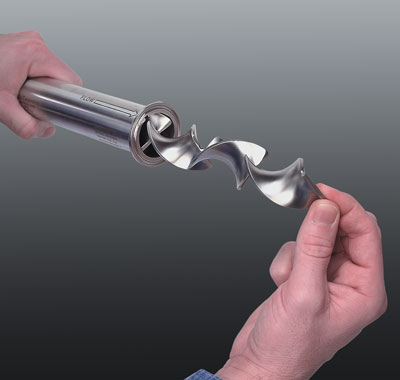
Good news...
I went to bed certain that our 180 second vehicle was dead. We split the tank over 20 inches of the main seam. My son and our welder Bob would not give up they got up at 6 am and spent the day grinding bending and otherwise beating the tank back into shape. They then re-welded the bad seam. At 2:30pm this afternoon it passed Hydro. Its clear that we are real close with little margin, but we do not pressurize in the presence of humans so even if it failed we would not hurt anyone. This was a 12 hr detour that we did not need. Its still a Hail Mary to be ready for the 180, but we are not yet dead.
As a result we are probably not going to be ready Friday Morning, its more likely we will try a Friday Afternoon flight and one or more Saturday Flights. I'm a bit hesitant to post the FAR map as we have had some theft problems, but I am going to post it for the next 24 hours.
If you want to come watch the earliest possible start is a Friday Noon safety briefing.
The Saturday Safety briefing will be at 7 am Saturday Morning. If you want to Camp at FAR you can. If yotu are not Xprize or Judges you will need to sign a FAR liabiliy waiver. You must be at the briefing to attend the event. It is very possible that Friday will be canceled entirely.
Far is a good 45 minutes from Mojave, and the road is rough. You may find the map here.
As a result we are probably not going to be ready Friday Morning, its more likely we will try a Friday Afternoon flight and one or more Saturday Flights. I'm a bit hesitant to post the FAR map as we have had some theft problems, but I am going to post it for the next 24 hours.
If you want to come watch the earliest possible start is a Friday Noon safety briefing.
The Saturday Safety briefing will be at 7 am Saturday Morning. If you want to Camp at FAR you can. If yotu are not Xprize or Judges you will need to sign a FAR liabiliy waiver. You must be at the briefing to attend the event. It is very possible that Friday will be canceled entirely.
Far is a good 45 minutes from Mojave, and the road is rough. You may find the map here.
The ball is dropped in the end zone.
The tank failure we had last night is not recoverable in three days. We are not going to fly the 180 second L2 silver ball this year. If Masten continues their recent rapid progress and finishes the L2 180 second flights we will probably never fly the silver ball again. Its basically scrap metal.
At a personal level I've worked on this project for 3 years and spent enough $ to buy a nice house anywhere but CA. . We came oh so very close to fielding two vehicles, a tiny bit less corrosion in a weld and we would have two vehicles ready to fly.(Proof the Silver flew) As a team of two we built and flew two complete vehicles, but the odds are now that we will walk away with nothing to show for our efforts. Its a really really bitter pill.
I'm now going to get a long stream of comments saying you were two guys in a garage up against teams with multimillion dollar budgets. This is true, but there is no junior varsity contest, just the one contest. I started this to compete and hopefully win, its not to be.
My current task is to scrape myself off the floor and try to get the Blue Ball ready to fly. We have a legitimate shot of tying Masten for the L1 2nd prize.
At a personal level I've worked on this project for 3 years and spent enough $ to buy a nice house anywhere but CA. . We came oh so very close to fielding two vehicles, a tiny bit less corrosion in a weld and we would have two vehicles ready to fly.(Proof the Silver flew) As a team of two we built and flew two complete vehicles, but the odds are now that we will walk away with nothing to show for our efforts. Its a really really bitter pill.
I'm now going to get a long stream of comments saying you were two guys in a garage up against teams with multimillion dollar budgets. This is true, but there is no junior varsity contest, just the one contest. I started this to compete and hopefully win, its not to be.
My current task is to scrape myself off the floor and try to get the Blue Ball ready to fly. We have a legitimate shot of tying Masten for the L1 2nd prize.
Tuesday, October 27, 2009
Progress ,...
We ground off all the mounting tabs we were not using.
We welded the Safety Vent to the vehicle instead of using a heavy Stainless sanitary clamp.
We shortened the legs etc.... So we need to re-hydro the main tank. We got a pin hole leak where we ground off unused tabs. Argh!!! Weld a plate over and try again.. We needed to get to 425 PSI. The Tank Failed at 350 on the main seam. . We had hydro-ed it to 400 in the spring, so over the last 6 months it lost 50 PSI. Probably means we are done for the 180.
We patched the tank on the blue ball after a hydro failure, we will look at patching this tank in the AM, but 95% sure it means no 180 for us.
We welded the Safety Vent to the vehicle instead of using a heavy Stainless sanitary clamp.
We shortened the legs etc.... So we need to re-hydro the main tank. We got a pin hole leak where we ground off unused tabs. Argh!!! Weld a plate over and try again.. We needed to get to 425 PSI. The Tank Failed at 350 on the main seam. . We had hydro-ed it to 400 in the spring, so over the last 6 months it lost 50 PSI. Probably means we are done for the 180.
We patched the tank on the blue ball after a hydro failure, we will look at patching this tank in the AM, but 95% sure it means no 180 for us.
Monday, October 26, 2009
Progress....
I have a theory as to why the cat pack suddenly died. (80% confidence) and I know how to avoid the issue. It was not my cost saving short cut. The old cat pack is being nitric acid stripped and re-plated. I've got all the material for a new no shortcuts CAT pack arriving at 8am Tuesday, with the Waterjet and Plateing house lined up to get a new one made. This should be ready Wednesday Afternoon.
We spent the day removing 40 lbs form the silver ball (Stainless fuel tanks and plumbing and misc unused fittings and bits. We then added back back 20lbs including a New higher capacity composite fuel tank and pressure bottles for external pressurization. The whole vehicle should be back together late Tuesday or Early Wednesday. It could hold double the propellant and it weighs 20 lbs less. The takeoff limitation will now be engine thrust, not propellant capacity.
If I can duplicate my in flight measured ratio of theoretical to actual performance I'll have 200 seconds of hover.
The LLC judges inspected our lunar pad and it passed.
Someone asked me today when I last had 8 hrs of sleep I asked if they meant in a single week?
Going to sleep UPS promises to arrive before 8 am.
We spent the day removing 40 lbs form the silver ball (Stainless fuel tanks and plumbing and misc unused fittings and bits. We then added back back 20lbs including a New higher capacity composite fuel tank and pressure bottles for external pressurization. The whole vehicle should be back together late Tuesday or Early Wednesday. It could hold double the propellant and it weighs 20 lbs less. The takeoff limitation will now be engine thrust, not propellant capacity.
If I can duplicate my in flight measured ratio of theoretical to actual performance I'll have 200 seconds of hover.
The LLC judges inspected our lunar pad and it passed.
Someone asked me today when I last had 8 hrs of sleep I asked if they meant in a single week?
Going to sleep UPS promises to arrive before 8 am.
Sunday, October 25, 2009
6 Days
Our 90 Second Vehicle is Ready.
Our RTK GPS tests with the helicopter say we have a chance to tie Masten in the 90 sec contest, but beating them outright would require some significant luck.
Our 180 Second vehicle is going to go down to the last minute. I disassembled the Motor and it looks good inside, the screens just look like they all got too hot. I think I need to change my warmup purge sequence. The sad part is that I really don't need to do a Cat pack warmup for normal ops, only for Tether ops as I need finer control of the in initial altitude on tether.
The vehicle flies at least as well as the blue ball, but we need to add a pressurization tank and
make weight reduction modifications to have any margin at all on the 180 second flight. Motor pressure drops are high so we need to hydro to a higher pressure and if the tank fails there we are done. I have parts of a spare Catalyst, but I took a cost reduction short cut on the last batch and they did not last as long as the previous batch. So I need to next day air some screen material and beg the waterjet and plating house to perform a miracle. It is all going to come down to the wire.
As one of the recent Masten posts commented about recent progress "we have had multiple consecutive miracles. " We will need similar to do 180. If we can fly for 180 seconds we can beat Armadillos accuracy, so it becomes a risk reward game.... IE On Saturday morning if we have a vehicle that would cost 50K to reproduce that has a 10% chance of success and a 90 % chance of destruction do we make the attempt? (0.9 * -$50K) vs (0.1 *$1M ) The calculus changes a little bit depending on Masten's result.
Are recently discussed on Twitter, Bon Nova is not going to fly this year.
I know exactly where they are in the process and its a really hard place to be in .
so close, but no realistic chance of completion, we were there last year.
Our RTK GPS tests with the helicopter say we have a chance to tie Masten in the 90 sec contest, but beating them outright would require some significant luck.
Our 180 Second vehicle is going to go down to the last minute. I disassembled the Motor and it looks good inside, the screens just look like they all got too hot. I think I need to change my warmup purge sequence. The sad part is that I really don't need to do a Cat pack warmup for normal ops, only for Tether ops as I need finer control of the in initial altitude on tether.
The vehicle flies at least as well as the blue ball, but we need to add a pressurization tank and
make weight reduction modifications to have any margin at all on the 180 second flight. Motor pressure drops are high so we need to hydro to a higher pressure and if the tank fails there we are done. I have parts of a spare Catalyst, but I took a cost reduction short cut on the last batch and they did not last as long as the previous batch. So I need to next day air some screen material and beg the waterjet and plating house to perform a miracle. It is all going to come down to the wire.
As one of the recent Masten posts commented about recent progress "we have had multiple consecutive miracles. " We will need similar to do 180. If we can fly for 180 seconds we can beat Armadillos accuracy, so it becomes a risk reward game.... IE On Saturday morning if we have a vehicle that would cost 50K to reproduce that has a 10% chance of success and a 90 % chance of destruction do we make the attempt? (0.9 * -$50K) vs (0.1 *$1M ) The calculus changes a little bit depending on Masten's result.
Are recently discussed on Twitter, Bon Nova is not going to fly this year.
I know exactly where they are in the process and its a really hard place to be in .
so close, but no realistic chance of completion, we were there last year.
Tuesday, October 20, 2009
Plans Update
We are going to go out to the site On Wedensday Morning set up and work on non-rocket flight things. RTK GPS base, Helicopter testing etc....(Can't fly the rocket on Wedensday, I forgot to Fax my FAA notification)
We will be flight testing Thursday and Friday and I think I have help for those days.
Its really hard to plan more than a day or two in advance but its really likely that I'll need some help during the week next week. So if you were so inclined check in on the blog or unrocket on twitter.
The current flight plans are to attempt the 90 second flight Friday Morning the 30th and the 180 second flight Saturday the 31st. If you want to come out and watch you will need to attend the safety briefing TBD some time late next week in Mojave. You will also need to sign the FAR liability waiver, I'll bring copies to the safety briefing.
The FAR site is about 45 minutes from Mojave out route 14. I'll provide a detailed map at the safety briefing.
The trip includes 10 miles of somewhat rough dirt road. (My wife drives her Honda civic out the road so its not too terrible.) Its actually really fun in my STI.
If you want to attend both days and can be 100% self sufficent you can probably camp on site Thursday Night and Friday. We will be camping on site and we will need our sleep so I'd really appreciate no 3am arrivals.
You can find my E-mail address phonetically in the comments of the previous blog thread.
We will be flight testing Thursday and Friday and I think I have help for those days.
Its really hard to plan more than a day or two in advance but its really likely that I'll need some help during the week next week. So if you were so inclined check in on the blog or unrocket on twitter.
The current flight plans are to attempt the 90 second flight Friday Morning the 30th and the 180 second flight Saturday the 31st. If you want to come out and watch you will need to attend the safety briefing TBD some time late next week in Mojave. You will also need to sign the FAR liability waiver, I'll bring copies to the safety briefing.
The FAR site is about 45 minutes from Mojave out route 14. I'll provide a detailed map at the safety briefing.
The trip includes 10 miles of somewhat rough dirt road. (My wife drives her Honda civic out the road so its not too terrible.) Its actually really fun in my STI.
If you want to attend both days and can be 100% self sufficent you can probably camp on site Thursday Night and Friday. We will be camping on site and we will need our sleep so I'd really appreciate no 3am arrivals.
You can find my E-mail address phonetically in the comments of the previous blog thread.
Sunday, October 18, 2009
A quick update...
Currently in the passenger seat of the car on the way home.
Just spent 4 days at FAR camping. Worked on three things...
1)Navigating Pad to Pad flying the exact desired LLC profile with the helicopter, and new GPS system. This work went very well, many exactly repeatable flights, only one scare the GPS needs more voltage for proper operation than all the other electronics, so one flight the system battery was low and even tired, sun burnt and sleep deprived at dusk I mangaged to save the helicopter by taking over.
2)We had a very poorly timed large project for a customer. It was the largest rocket ever fired at FAR and the test went really well. Can't really say more.
3)We tyried to hover the silver ball. We got the altitude stuff under controll, but never managed a stable hover. Nothing we did in the way of loop tuning seemd to help. Got up before sunrise this morning to carefully look at everything in the system. I did some sweeps of the gimbal actuators trying to precisely measure dead band and hystersis. Came up with a sequience where the actuator moved OPPOSITE of the commanded direction. This jives with observations and as we would hover then just all of a sudden flip over to the abort limit. Seems to come and go depending on how I press on the PCB, I had no replacement with me so it means going home.
My son is in the middle of starting a new business and has other commitments for most of this week. I've got business commitments Monday and Tuesday, but I hope to go out to the site
Tuesday night for more testing. We will be short handed so if you are in the So cal area and don't mind hard work in the sun at a site with no good shelter and no running water we could really use some help.
Just spent 4 days at FAR camping. Worked on three things...
1)Navigating Pad to Pad flying the exact desired LLC profile with the helicopter, and new GPS system. This work went very well, many exactly repeatable flights, only one scare the GPS needs more voltage for proper operation than all the other electronics, so one flight the system battery was low and even tired, sun burnt and sleep deprived at dusk I mangaged to save the helicopter by taking over.
2)We had a very poorly timed large project for a customer. It was the largest rocket ever fired at FAR and the test went really well. Can't really say more.
3)We tyried to hover the silver ball. We got the altitude stuff under controll, but never managed a stable hover. Nothing we did in the way of loop tuning seemd to help. Got up before sunrise this morning to carefully look at everything in the system. I did some sweeps of the gimbal actuators trying to precisely measure dead band and hystersis. Came up with a sequience where the actuator moved OPPOSITE of the commanded direction. This jives with observations and as we would hover then just all of a sudden flip over to the abort limit. Seems to come and go depending on how I press on the PCB, I had no replacement with me so it means going home.
My son is in the middle of starting a new business and has other commitments for most of this week. I've got business commitments Monday and Tuesday, but I hope to go out to the site
Tuesday night for more testing. We will be short handed so if you are in the So cal area and don't mind hard work in the sun at a site with no good shelter and no running water we could really use some help.
Monday, October 12, 2009
Definition of Insanity....
Definition of insanity: Doing the same thing over and over and expecting different results.
Clearly we don't think we are doping the same thing, but the results are really similar....
Drive 4 hours, camp, setup test, fly abort, break the vehicle, driver home 4 hours, fix vehicle, lather rinse repeat.
We should have the vehicle back together tonight. We have fabricated a new version of the the part in the gimbal mount we broke, but we still need to fabricate a brace so it won't break again.
We failed to record data on the last flight, so almost no useful information from the test.
(The error was a tired operator error, not a fundamental problem)
I've spent the morning changing software so data will be recorded automagically without any operator intervention, in 3 places, on the ground station PC, on the telemetry box, on an SD card in the vehicle, just to be redundant.
Looking at what data I do have, several things are clear.... proportionally it looks like the gimbal system needs a lot more differential correction than the vanes did.
The system seems to be a lot more sensitive to every thing being level to start with, the vane system just plain ignores tilts of up to 15 degrees, does not even cause a noticeable start up transient. This gimbal vehicle seems to want to start out with a large transient.
On a spherical vehicle its actually really hard to be sure that everything is lined up level.
The IMU is level, the motor is dead level vertically, but I'm sure I have a center of mass offset for the partially full fuel tank. Again the vanes vehicle just ignored the center of mass offset when flying with the permanganate tank.
I'm not a big believer in software only simulations, I like to build real world analogs and test those, this may change my mind. For a long time my todo list has had a hardware in the loop simulator on the list, ie simulate IMU and GPS inputs to the computer, measure the actual valve and motor positions and use these to run the simulation. This will probably be my winter project.
Clearly we don't think we are doping the same thing, but the results are really similar....
Drive 4 hours, camp, setup test, fly abort, break the vehicle, driver home 4 hours, fix vehicle, lather rinse repeat.
We should have the vehicle back together tonight. We have fabricated a new version of the the part in the gimbal mount we broke, but we still need to fabricate a brace so it won't break again.
We failed to record data on the last flight, so almost no useful information from the test.
(The error was a tired operator error, not a fundamental problem)
I've spent the morning changing software so data will be recorded automagically without any operator intervention, in 3 places, on the ground station PC, on the telemetry box, on an SD card in the vehicle, just to be redundant.
Looking at what data I do have, several things are clear.... proportionally it looks like the gimbal system needs a lot more differential correction than the vanes did.
The system seems to be a lot more sensitive to every thing being level to start with, the vane system just plain ignores tilts of up to 15 degrees, does not even cause a noticeable start up transient. This gimbal vehicle seems to want to start out with a large transient.
On a spherical vehicle its actually really hard to be sure that everything is lined up level.
The IMU is level, the motor is dead level vertically, but I'm sure I have a center of mass offset for the partially full fuel tank. Again the vanes vehicle just ignored the center of mass offset when flying with the permanganate tank.
I'm not a big believer in software only simulations, I like to build real world analogs and test those, this may change my mind. For a long time my todo list has had a hardware in the loop simulator on the list, ie simulate IMU and GPS inputs to the computer, measure the actual valve and motor positions and use these to run the simulation. This will probably be my winter project.
Thursday, October 08, 2009
Off by a factor of 57.295779513.....
I've been playing with the high accuracy RTK GPS on the helicopter.
The software reports stunningly consistent positions etc....
But visually the helicopter wanders all over the world.
I've jsut solved it.
The Old GPS reports position in degrees, new GPS reports position in Radians!
Arghhhhh! Since I never actually looked at the lat lon positions I just told the vehicle to remember where "here" is and report distances from that reference point I never noticed.
I like using the binary records from the GPS's as parsing NEMA style text is a conversion that is not needed. If the binary record reports IEEE double format just use them. Alas The two GPS have different byte orders as well one is big endian one little endian, one reports velocity as heading and speed, one reports as vnorth and veast. I got all of these conversions working, but missed the radians/degrees difference. I'm tired and in a hurry, not the best situation for quality software. If NASA can make these kind of errors I guess I'm in good company. (Remember Mars Climate Orbiter?)
The software reports stunningly consistent positions etc....
But visually the helicopter wanders all over the world.
I've jsut solved it.
The Old GPS reports position in degrees, new GPS reports position in Radians!
Arghhhhh! Since I never actually looked at the lat lon positions I just told the vehicle to remember where "here" is and report distances from that reference point I never noticed.
I like using the binary records from the GPS's as parsing NEMA style text is a conversion that is not needed. If the binary record reports IEEE double format just use them. Alas The two GPS have different byte orders as well one is big endian one little endian, one reports velocity as heading and speed, one reports as vnorth and veast. I got all of these conversions working, but missed the radians/degrees difference. I'm tired and in a hurry, not the best situation for quality software. If NASA can make these kind of errors I guess I'm in good company. (Remember Mars Climate Orbiter?)
Wednesday, October 07, 2009
Observations....
I've been working on the Vertical issue, so I have not really gotten to work on the position hold and overall horizontal stability. In viewing the Masten Video Several things are clear,
1)Their motor movement is a lot smaller than mine, I think I probably have the gross actuator gain turned up too far.
2)Its real clear that they switch modes on the descent, IE the vehicle it goes into tight position hold mode, the engine then starts moving a lot more.
In any case its cool to watch the videos.
1)Their motor movement is a lot smaller than mine, I think I probably have the gross actuator gain turned up too far.
2)Its real clear that they switch modes on the descent, IE the vehicle it goes into tight position hold mode, the engine then starts moving a lot more.
In any case its cool to watch the videos.
Congradulations to Masten.
Congratulations to Masten. They did as good a job as is likely possible.
Their preliminary average landing accuracy was 15cm so based on my understanding of the rules we would have to have an average accuracy of 4.9 cm to beat them The vehicle reference point can move 5 cm just depending on how it settles on the gear. That is impressive.
To Tie and split the purse
we would need an accuracy of 25.9 cm or better.
On Monday I stopped by their shop and got a look at their L2 vehicle (I think I can now say this publicly as they have now published a picture of it) it's very light and looks largely complete. They probably just have to bolt the engine and electronics from xombie on it and they have a real good shot at Level 2.
All in all a very discouraging week.
Their preliminary average landing accuracy was 15cm so based on my understanding of the rules we would have to have an average accuracy of 4.9 cm to beat them The vehicle reference point can move 5 cm just depending on how it settles on the gear. That is impressive.
To Tie and split the purse
we would need an accuracy of 25.9 cm or better.
On Monday I stopped by their shop and got a look at their L2 vehicle (I think I can now say this publicly as they have now published a picture of it) it's very light and looks largely complete. They probably just have to bolt the engine and electronics from xombie on it and they have a real good shot at Level 2.
All in all a very discouraging week.
Tuesday, October 06, 2009
Forklift Smack view #2
Another on-board view of the forklift smack flight.
I like this view.....http://www.youtube.com/watch?v=uAgY2gK4OL8
I like this view.....http://www.youtube.com/watch?v=uAgY2gK4OL8
Monday, October 05, 2009
Testing 1..2.. smack
We flew twice today. We smacked the forklift again, we are climbing too high , its now jumping off the ground going to the proper altitude sitting there for awhile then slowly ever so slowly climbing up up and away. I need to spend some time reviewing data and trying to understand whats going on.
On the last abort we smacked the forklift and tore off a landing gear.
We were really hoping to get some in flight performance measurements.
No such luck. About all we know is that its performance is better than the blue ball.
Is it enough better to do 180 seconds? That's the $1M question.
We will probably go out again Wednesday night or Thursday morning.
We were testing some new wide angle video and while the picture is not perfect (Its facing the sun) we got some really spectacular smack the forklift video. (The HD stuff takes to long to process on the computer I just don't have time.) This post was written in the car so the MiFi is working while enroute, and the laptop just does not have the cajones to edit video.
I'm really looking forward to Nov 1st.
On the last abort we smacked the forklift and tore off a landing gear.
We were really hoping to get some in flight performance measurements.
No such luck. About all we know is that its performance is better than the blue ball.
Is it enough better to do 180 seconds? That's the $1M question.
We will probably go out again Wednesday night or Thursday morning.
We were testing some new wide angle video and while the picture is not perfect (Its facing the sun) we got some really spectacular smack the forklift video. (The HD stuff takes to long to process on the computer I just don't have time.) This post was written in the car so the MiFi is working while enroute, and the laptop just does not have the cajones to edit video.
I'm really looking forward to Nov 1st.
Saturday, October 03, 2009
Testing again...
All tested and ready to go. Were on the way to FAR once more.
In reviewing the video of the last flight I was not really happy with it,
it was stable, but did wallow around more than I'd like. So I did a through review of the code and the adjustable variable settings. I found an error in my integral position gain. In my loop code I'd transitioned from having the displayed integral constant be the proper value or a percent value.
I'd set the value like a percent and used it as a normal so the itnegral gain was 100x too high.
This makes me much happier as the flight visually looked like an earlier blue ball flight that had the same problem. The code set started on the helicopter and transitioned to the blue ball and from there to the silver. I've tried to put all the vehicle specific stuff in a separate compilation modules, but the code has now drifted so I have three similar but not identical code sets.
I Started out with everything under CVS on my main computer with updates from the laptop. Then the laptop died and code was moved to the backup laptop in the field and the CVS stuff has not caught up. The project always has the dilemma, stop and fix a systematic problem where it effects your productivity, but not the actual flight vehicle. 6 months ago these decisions were easier, now it's will the time taken to fix "This" have a payback in the next 27 days.
I'ts pretty clear that the "2nd" gneration is better than the first. The Blue ball is our 2nd gen vehicle, the silver is gen 2.5. We have lots of things we know we would do different on gen 3, yet the current plans for gen 3 add the whole aerodynamics aspect that is missing from the LLC vehicles.
In reviewing the video of the last flight I was not really happy with it,
it was stable, but did wallow around more than I'd like. So I did a through review of the code and the adjustable variable settings. I found an error in my integral position gain. In my loop code I'd transitioned from having the displayed integral constant be the proper value or a percent value.
I'd set the value like a percent and used it as a normal so the itnegral gain was 100x too high.
This makes me much happier as the flight visually looked like an earlier blue ball flight that had the same problem. The code set started on the helicopter and transitioned to the blue ball and from there to the silver. I've tried to put all the vehicle specific stuff in a separate compilation modules, but the code has now drifted so I have three similar but not identical code sets.
I Started out with everything under CVS on my main computer with updates from the laptop. Then the laptop died and code was moved to the backup laptop in the field and the CVS stuff has not caught up. The project always has the dilemma, stop and fix a systematic problem where it effects your productivity, but not the actual flight vehicle. 6 months ago these decisions were easier, now it's will the time taken to fix "This" have a payback in the next 27 days.
I'ts pretty clear that the "2nd" gneration is better than the first. The Blue ball is our 2nd gen vehicle, the silver is gen 2.5. We have lots of things we know we would do different on gen 3, yet the current plans for gen 3 add the whole aerodynamics aspect that is missing from the LLC vehicles.
Thursday, October 01, 2009
Driving home again...
We tried one hover test this morning about 11:45 am. The vehicle was stable, but we continue to have vertical throttle control issues, as it climbed above the fork lift then aborted when the ropes jerked on it hard enough to exceed the tether tilt abort limits. This happened simultaneously with my hitting abort. Luckily we missed the forklift and did no physical damage. The pressure readings were being erratic all morning and after the flight we did some debugging and one of the transducers shorted, taking out the A/D converter and letting out the electronic magic smoke. Putting short protection on the 4-20 ma transducers has been on my "I really should do that some time list". I guess it will be friday. So if all goes well we will be doing the 4 hour drive again on Friday night.
After determining that the vehicle was not fixable in the desert, we also received a delivery of propellant and decanted that from drums to smaller poly totes. Right before sunset we flew the helicoipter with the full RTK gps stuff running. Much more accurate, Seems to be more stable, but we ran out of light so we will test that more this weekend.
Its 9:30 PM we are 2:45 min from home (my son is driving), I'm on the web with the new MiFi wireless access point. It does not work at the FAR site, but works on the road to and from. In the past its always been that both my son and I wanted to drive as being passenger was really boring,with live internet access now the other eway around as the passenger can surf,,,, I think I'm going to go read the Firday XKCD.
After determining that the vehicle was not fixable in the desert, we also received a delivery of propellant and decanted that from drums to smaller poly totes. Right before sunset we flew the helicoipter with the full RTK gps stuff running. Much more accurate, Seems to be more stable, but we ran out of light so we will test that more this weekend.
Its 9:30 PM we are 2:45 min from home (my son is driving), I'm on the web with the new MiFi wireless access point. It does not work at the FAR site, but works on the road to and from. In the past its always been that both my son and I wanted to drive as being passenger was really boring,with live internet access now the other eway around as the passenger can surf,,,, I think I'm going to go read the Firday XKCD.
Subscribe to:
Posts (Atom)