Thursday, August 20, 2009

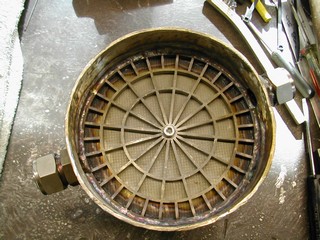
Rocket parts and fruit


In spite of the whimsical picture and title this is a serious post.
I can make rocket parts, or I can buy rocket parts. I can grow my own fruit or I can go buy fruit.

I design embedded electronics as my primary profession. When I first started I built elaborate breadboards and test circuits, I even played with etching my own PCB's. Now I order pcb's from the prototype PCB vendor for everything. Even test circuits. What changed?
I'm much more experienced and my designs have a lot more experience behind them. I've learned what works and what does nott I can read a data sheet (including what is not in the data sheet, often the most important part.) I've also learned that spending the money getting a proper prototype PCBs and assembly is a more cost effective use of my time.

At home we have a peach tree, it grows wonderful peaches to the point that we are all tired of peach pie by the time it drops the last peach. There is a sense of satisfaction from growing your own. All the rest of our food we purchase.

When I started working on rockets it my attitude was more hobby and satisfaction from doing oriented. You can see from the old blog posts we built valves, gearoxes and even weird tanks.
As the project has matured and we've started actually doing work for customers I'm starting to realize the value in off the shelf stuff. My attitude is becoming more business like.

For a number of years now we have been sending drawings and material to thunderbird waterjet here in San Diego and having them cut out parts. We had the hemispheres for our tanks spun by AMS industries. Yet the vast majority of our parts have been fabricated by us for us. We don't generate elaborate 3D models and then fabricate the parts, we build a little, scratch our head and build some more. If we did not have in house machinging capabilities it would significantlyy impede our progress, having to wait for an outside vendor to fabricate every bracket and doodah would take forever. I think this lack of inhouse capabilities is one of the things that has slowed Masten down. Yet fabricating everything in house does not make sense either . Some things like the regen rocket motor I documented on this bblog were fabricated in house from detailed drawings. I think that was an error. I'm in the process of fabricating a new regen motor from stainless. I sent the drawings out for quote on MFG quote and was astonished at the price quote I got. The stainless part among the fruit is the first signifcant custom part we have not fabricated in house. Several more parts of that assembly are due soon. I can't imagine the nightmare of machining that part out of solid stainless, yet the vendor did a really good job for a very fair price. (I'll talk more about the vendor and ordering process when I get the full set of parts, so far I'm pleased.) One of the down sides is that our welder is going on vacation for 10 days and the ordered parts are going to just miss his departure, so we won't be testing much for about two more weeks.

Its not always easy to know what to build and what to contract out, I think its really important to have in house fabrication skills and equipment, but I also think we have erred in not sending more work out.

A final question for the peanut gallery, I'm 90% sure the vendor making these parts underbid the job. They had a couple of programming problems and probably scrapped more metal than their profit margin. As a business man I feel strongly in win win arrangements with vendors.
If the business is not win win then eventually the vendor won't be there next time you need him. Would you bring this up with the vendor and offer to cover some of their loss?
(Clearly by the terms of the quote I don't have to)

Saturday, August 15, 2009

Another Long Day.

The Day Started at 5:30 I spent the first hour planning my weekend. the next hour I laid out the parts and peices for the days and figured out what I was missing. Then I was at Marshals Industrial hardware store at 8:am and the IMS Metal supply at 8:30.
... Its 10:30 PM I'm done for the day.

I Fabricated two beefy bearing holders and gearbox adapters for to the ball screws that will be the gimbal actuators on the silver beast. I also machined the ball screw ends and made a planetary spider to ball screw adapter. Its going to be a light, strong, fast and brush less gimbal actuator.
They are about 1/2 the weight and cost of the bug actuators everyone else is using. (assuming my time is worth zero, any realistic valuation of time and there insanely expensive.)

I also spent about 4 hours at Flometrics testing injector concepts for the Bi-prop and Steve an I built a flow visulization test setup. Many thanks to Steve! We used Flometrics Pistonless Rocket Pump as the drive the injectors, we could dial up any pressure from 50 to 400PSI and it just worked. It was flawless. Some of the misting spray nozzles have a maximum pressure, we discovered that one of the tested spray heads had unstable flow above its rated pressure. It was a swirl nozzle and it had cavitaion where the flow was really erattic. That was about the only real supprise everything else tested as one would expect it to.

I'll post some pictures of the tests. Sunday I hope to turn what I learned from the testing into a set of drawings to Fabricate the injector. I also ope to compeltly finish my actuators.
It was nive to spend the weekend making stuff rather than driving out to the desert/FAR.

Thursday, August 13, 2009

Why Space Matters

Why does space matter?

I'm lucky in that I was born in the united States. Our family has multiple cars, a house to our selves, more food than we should eat. Our standard of living by any real measure is better than any group in history. The United States has about 5% of the world population and consumes about 30% of its resources. Personally our family is probably above average in resource consumption even for US citizens. So I'm going to ask and answer a series of questions.

1)Are citizens of China, or Sub Saharan Africa inherently inferior to my family?
NO they are not,I believe all humans are born with certain inherent value.

2)Do they have a right to aspire to what I have.
Yes they do.

3)Do we think that global terrestrial resource production can be increased 6 fold from what it is now?
No I don't think that is reasonable outcome.

4)Is there any process where U.S citizens will voluntarily reduce there standard of living by a factor of 6. No I don't think that will happen.

5)Do we the U.S have the right to use force to prevent others from having what we have?
No we do not.

6)Will some combination of conservation and increased production create a factor of 6 when adjusted for the ongoing population growth in the world?
This is the option that all the traditional "Greens" or environmentalists are betting on. They naturally feel that if we just cut back a little bit everything will be better. I just don't see it. It is such a violation of natural human striving tendencies I can't see getting to a factor of 6.


So unless you want to change the answer to one of the 6 questions above "we" the population of the world are in a no win scenario. Some things like good batteries and low cost fusion power could help significantly, but its not enough. Just imagine how much steel it would take to give every family on earth 2 cars? (Recent studies have shown that mass transit when fully accounted over the life cycle of the system are just as resource intensive as a small Car. )

Where will the additional resources come from?
Where can we do dirty industrial process where we don't soil the environment?
Where can we find unlimited energy?
Unlimited expansion space?
Unlimited metals?
Unlimited Organics?
(Don't nit pick Unlimited in this context means several orders of magnitude more than we have now)

The only two answers are a 6 fold reduction in earth's population or expansion into space.

We are spending trillions on the assumed option in question 6 and simple math shows its not possible. Where are the trillions helping us expand in a way that can work?

Just something to think about....

Sunday, August 09, 2009

Thats why we test...

We tested again Saturday. This was the first time I was responsible for the FAA notification and not just piggy-backing on the FAR standard waivers. The Airspace at FAR is interesting. From ground from ground level to 1200 feet AGL we are in uncontrolled airspace. From 1200 ft AGL l to 18000 ft MSL we are under the FAA jurisdiction, from 18000fto to 50K ft we are under the jurisdiction of the Edwards 2508 restricted area. Since I’m under 1200 ft AGL for tethered (or free) flights I don’t need a waiver or authorization to enter controlled airspace. Since I’m not entering controlled airspace. Yet the new FAR 101.27 requires I notify the nearest ATC facility between 24 and 72 hours before the event. A lot of the stuff flown at FAR goes above the 18K limit so when I asked FARS primary Pyro op who to notify I was given the 2508CCB contact. They did not want the notification because we aren’t in their airspace. When I called the loacal High Desert ATC facility

ATC: how high,
ME: 45ft
ATC: Why are you telling me this.
ME:Can I have your Fax number.
ATC:Here it is xxx.xxx.xxxx
ATC:What am I supposed to do with the document your faxing?
ME:I don’t really know I just know I have to send it to you. It does not effect your airspace were chained to a 10000lb forklift.
ME: FAR 101.27 says I have to tell someone. I’m crossing my t’s and dotting my i’s.
ATC I see.

So I faxed the notification required of 101.27 to the High desert ATC facility.

A few weeks ago our FAA representative asked if he could come out a watch us fly so Wynn came out to observe our flights and flight preparation. We were all setup by 9 am and were attempting to do a 90 second Tethered hover. We had never successfully flown at that weight. We didn’t do it on Saturday either. You can see the heavy takeoff video here our vehicle is VERY light without payload or propellant we weight less than 100 lbs. Since we are using a low performance propellant so we need a lot of it so our weight with payload and full fuel is about 400lbs. This means that we have a 3:1 weight change in flight. From the video its obvious that with a 3:1 weight change we need to do some gain scheduling as we had plenty of thrust, plenty of control authority we just weren’t stable. We continued to do short hops until we had dissipated enough propellant to fly stably. We eventually got an absolutely perfect 65 second flight but that happened after the one remaining video camera ran out of battery. So no video. We will try again soon.

I think that Wynn (our FAA rep) was impressed with how remote the FAR site is. You just can’t get a feel for how remote things are by looking at google earth. Standing on site and seeing the total desolation in every direction gives you a better feel. I think Wynn enjoyed the show, I’m glad we got at least one successful flight off for him.

Thoughts on the stability issue: With a gimbals system the forces generated by the thrust vector scale directly with the motor thrust. With vanes the relationship is not so clear as one increases thrust one increases the density of the gasses within the cone that the vanes act in. So its not clear if the vector forces are linear with thrust (thrust is a good stand in for weight and a marginally good stand in for rotational inertia) or if they increase or decrease? Looking at the video this looks a lot like earlier problems where the differential gain was too high. I don't really know if I should just lower all the attitude gains or if I should vary the P,D terms differently.

I have not yet reviewed the data, I hope to do so this week.

I also added another wiggles video from onboard.


Saturday, August 01, 2009

Update...

Friday was propellant day, I was out at FAR all day.

  • I received an order of 85% from XL Space.
  • I built the forms for the base of the generator that will complete my processing facility.
  • I fixed a leaky valve on the safety water supply pump.
  • I built a frame to hold the Refrigerated air dryer up on a shelf off the ground to give more floor space.
  • I cleaned up around the site a little bit.

One more long day to finish my processing facility and I’ll have three sources of propellant.

180 second status: I’ve put together both an order and a RFQ for stainless versions of the regen biprop motor to replace the dead aluminum one. After examining the dead motor its really clear that something bad happened in the region of the pressure port. It was more than a a bad weld. We either had the port through the wall leak fuel rich stuff into the cooling jacket or we have some kind of contamination there. On the next motor this is going The new motor will have an uncooled section thats identical to the top of the blue ball motor and will weld to a cooled lower section. There will be no joints through the cooling jacket wall.

Realistically we get one more shot at the 180 second motor and the way rockets go that has to be considered a hail mary.

Tuesday, July 28, 2009

Observations from the fireing

As shown in the camera death video we ran the H2O2 Kerosene motor last weekend. The chamber pressure port failed causing local loss of coolant and subsequent failure.

Even with the short run it answered several questions I've had about H2O2 Kerosene motors.

The Motor was built around 3 1"x  7" metal monolith platinum coated catalysts.

This gives it a large contraction ratio 7" to 1.9" . It was also designed with an L* of 60.

Test conditions:
~200 PSI chamber pressure.
~ 6:1 O:F by weight
90% H2O2


Observations:

From the previous mono-prop runs its clear the cat pack is not working very well The metal monolith seems like it needs finer channels.

Even with a partially working cat pack ignition was almost instant. Reading the available literature ignition seems to be a strong function of  contraction ratio.

One of my personal questions was can you run an H2O2 motor like a traditional bi-prop where the peroxide is thermally decomposed in the chamber?  With a generous L* of 60 and contraction ratio of  almost 4 at a chamber pressure of 200 psi the answer is no.  There was clearly undecomposed peroxide in the plume.

Sunday, July 26, 2009

Camerabbq


This camera gave its life to provide you with this video.

Monday, July 20, 2009

3 Months to go and beyond.

The 2009 NG-LLC ends on October 31st, just over three months from now. Seems like a long time but it will go by in a flash. This week I’m cleaning up the blue ball  removing some excess wiring, freshening the cat pack etc. If all goes well we will try a 90 second Tethered hover on Saturday.


I think we can be ready for the 90 second flight before the deadline. getting ready for the 180 second flight will be harder. If the current silver ball does not have the necessary performance we are basically done for the year.


What happens after 2009? If the any of the 180 second prizes are un-won we will obviously attempt that. Beyond that we want to work toward a reusable sub-orbital vehicle.  Anything that can do the 180 second flight should be able to get to over 100K ft with just a tiny bit of Aerodynamic cleanup. Or success of failure at claiming the prize $ will set the pace on that effort.


Looking forward low cost access to space is a civilization changing event. Today you have a few well funded efforts in that direction SpaceX Blue Origin , Virgin Galactic/Scaled. You have a bunch of bootstrap organizations, Armadillo, Masten, Xcor, JP Aerospace etc... You have a few that failed along the way, Kistler, Beal(I really like Beals technical approach), and some that were absorbed into the edges of traditional aerospace such as  orbital.


  As a somewhat successful business man  with a passion for space I’ve burned a lot of hours thinking about how to build a space company that makes business sense.  It is a significant chicken and the egg problem. No matter how well thought out my business plan is no one is going to hand me a 100M blank check to go chase after spacex.  Yet without real commercial market driven, bare knuckle no holds bared competition in space access we are all stuck on this rock.


  It may be possible to slowly build up and bootstrap a company from marginally profitable sub-orbital to something orbital, but it will take tens of years and I’m just not sure I have the energy to put 200% into this for that long.  On the flip side I don’t see anything else that is really worth doing. That dilemma, understanding the magnitude of the task and at the same time seeing it as a truly worthy task actually has me a bit depressed.


Some days I see the people sitting on the beach with a beer in hand and ’m jealous, other days I see that as a waste of human potential. My wife thinks this whole project has driven me over the edge from committed to obsessed. What can I say, I’m an unreasonable man.


Monday, July 13, 2009

No Strings Attached


(Thanks to Kevin Baxter for the Photo)
The Landing was perfect, more later in the week once I recover from the 111F days in Mojave.
Video onboard
A Video from Ben Brockert
VideoFrom the ground.

Thursday, July 09, 2009

Going to FAR

Just finished packing for an early AM departure. I started the day at 4:45 its 11:21 I plan to leave at 4:00 am 18+ hours, . I’m tired.


We have four major projects for this trip in order of importance.


  • Large Customer Project that dwarfs the other three.

  • Static fire H2O2/Kerosene silver ball.

  • Tether fly blue ball. (If this goes really well might try first free flight)

  • Work on Propellant Production.

There will be a TV crew on site Saturday and all the FAR regulars have been asked to bring their best “show and tell.”


Monday, July 06, 2009

The ... is connected to the ...

My basic control loop is as follows:


  • 1)I have an actual and  desired position.-> I use that to generate a desired velocity.

  • 2a)I transform the desired velocity into a desired right and forward velocity with current yaw/heading.

  • 2b)Transform the actual velocity into right and forward velocity with current heading.

  • 3a)I use  actual and desired right /left velocity to set desired roll* angle.

  • 3b)I use actual and desired forward/back velocity to set desired pitch angle.

  • 4a)I use the actual and desired roll angle to set the aileron or actuator position to cause roll.

  • 4b)I use the actual and desired pitch angle to set the elevator  or actuator position to cause pitch change.

I reality steps 1,3 and 4 are PID loops(proportional integral differential) , I’ve been running for a while with  Step 1 P,I step 3 p and step 4 pd. For hovering this works just fine as what I really care about is holding position. Any bias in the system is taken out with the integral term in the position hold. When I start navigation from place to place that does not work so well. It’s beginning to look like I need properly distributed I and D terms on each loop. For example a helicopter does not hover with the frame level, my current helicopter hovers with a 12 degree to the right and 5 degree nose up from its resting position on the skids. I could carefully tune the centers of all the loops so these biases don’t effect the control laws, but they seem to vary with somewhat randomly.


I’m in the process of trying to change to 1:PI,3:PI,4:PID as I get each loop under control I have to turn down the gain in the outer most loops as the gain was cranked up there to handle the biases not taken into account with the integral terms.   I have a simple utility that runs on the laptop and allows me to tweak gain constants without recompiling things in the field. It also allows me to assign one constant to a trim lever on the RC transmitter for tuning. I’ve flown  about 30 times in the last week trying to get all this sorted out on the helicopter.  I’m going to have to tune the rocket as well, but hopefully I’ll be more efficient with that after learning on the copter.


I started with 10 variable slots, and have now moved to 16 variable slots. I was having a hard time making sense of it all until I discovered today that when I did a cut copy and paste on the UI that sets gains, the channel being assigned to the “trim” lever was the wrong one, olny  if I was trying to set one of the 6 new channels, so the trim lever made things change, but not what I though it was making change so it was all very confusing arghhhh…


I’ve fixed that tonight and I’ll try again after work on Tuesday, or maybe not, I’ve been reading some David Weber snipits aka “book crack” and amazon tells me the book in question has been shipped and I will get it on Tuesday. no more rushing to the site to see the latest installment on Mon,Wed,Fri ;-)


*Since I started on a helicopter I’m using that coordinate convention, where what is typically done for rockets is to call “roll” rotation around the nominally vertical actuator.

Sunday, July 05, 2009

NGLLC news etc...

Several items of interest in the NGLLC news. Masten Space has announced they are  planning both a Level 1 and Level 2 attempt, and Armadillo flew the super Mod for 178 seconds. It looks like there are presently three teams with flyable vehicles in active testing. It should be interesting.


I’ve spent the last week working on navigation and control with the helicopter. I’ve been chasing things like the natural frequency of the rotor interacts badly with the Z axis accelerometer for some interesting aliasing. (The vibration on the rocket looks like white noise, the vibes on the helicopter don’t.) I’m also working to improve the navigation accuracy as that will be key to winning if there are multiple successful LLC teams this year.


This coming weekend the 11th we will be out at FAR and hope to fly the blue ball and static test the silver ball again. I think this will be a big FAR weekend with a number of interesting things going on.


Saturday, June 27, 2009

Propellant Progress..

It looks like we have secured another source of 50% peroxide.


The process of turning 50% food grade into 85–90% rocket grade is as follows:


1)Filter the peroxide through ion exchange resin to remove stabilizers.


2)Sparge from 50 to 70%


3)Sparge from 70 to 85%


Step 1 needs to be conducted with the bulk temperature below 70F or the resin tends to catch fire. The low temp at FAR is presently >70F with a high > 100. This leaves the bulk peroxide temperature too hot.  So we took a dewar of Lquid nitrogen out to the desert and cooled and then filtered about 1500lbs of peroxide. We cooled the ulk peroxide by bubblin Ln2 throu from the bottom. We started at 11PM and finished about 6:30 am just as ths sun was comming up. Everything worked exactly as desined and according to the TDS meter we removed the bulk of the stabilizers.  We got back home at about 11:30 am this morning. Its just after 6pm and I just woke up. This all nighter thing worked so much better 25 years ago in college.


We have about 30 minutes more work and we are ready to try step 2. We will proably do this next weekend. I can’t do the final step until the generator I ordered arrives. The 50 to 70% step can be done with filtered “desert” dry air, the 70 to 90 step needs the air to be dryer than that and our big oiless compressor and -100F due-point airdryer system needs more power than we presently have on site.

Saturday, June 20, 2009

Wind blown and dried out

Just got back from the desert. I spent two days on site at FAR, I went out Thursday night, I was there to help unload some deliveries of steel and concrete block Friday Morning.  The deliveries are for new viewing bunkers as the existing viewing bunker has been over full and crowded for a couple of recent launches.


I also got 3000 lbs of 50% peroxide delivered. I think I’ve resolved my propellant supply.


I spent most of the day Friday working on our refining equipment. Saturday was a general FAR work party.  I’d hoped to run the first de-ionization steps on the new propellant, alas it was really hot and the temperatures were just too high to do this safely.  I’d also hoped to fly the blue ball under tether but it was too windy. I did fly the helicopter in 25+ MPH gusty winds and it did just fine.


I spent two full days working hard and accomplished one of my three primary goals for the trip. There are always lots of secondary goals to accomplish. Often simple things like: we now have 5 large  bottles of compressed nitrogen on site and I had no way to tie them all down properly. I’d been laying the bottles on their sides. Now the bottles are standing up and properly restrained  to the container wall.


Monday, June 15, 2009

Things that work are important.

This project is a big project and its important to have some success along the way.  Its easy to get mired in a bunch of problems such that you experience no successes that you can celebrate.


So in a project this large its important to schedule small successes to keep the motivation up while you slog through the details of 10K things.


I went out and flew the helicopter again tonight. For the first time I turned on the integral term in the gps position hold. It made a huge difference. A helicopter flies with a slight tilt, the tilt is such that with purely proportional position gains it has to build up some error to stop moving. Then it also moves around as the wind changes and the proportional error grows to the point to counter the wind.  I’d been doing: Start where you are, climb vertically, hover for awhile and land.  I also like to be behind the helicopter when playing safety pilot as its easier to stay oriented and try a save if needed.  Well it just so happens that in proportional mode every time you do one of these cycles the helicopter backs up and to the left about 2m. Do it 5 times and you have  moved off the edge of the field and over the embankment. With the integral gains turned on I flew it 6 times and the final flight landed within 8 inches of the original take off point.


Its cool when everything works. I also fired up the helicopter flight data review system and it just reminds me how much detail work has gone into this project:  (The position hold accuracy plot is uninteresting as the errors are so small the lines look straight, so here I show the auto takeoff.)


Click on the picture for a bigger view  and you can figure out where I test ;-)


HeliDialog 

Sunday, June 14, 2009

Some updates

When I started this project it was really fun. Its now been almost three years and its gotten a bit more serious and not as fun.  I’ve got the perpetual internal battle about do I lighten up a bit and have more fun, or do I drive to completion with the thought that I may eventually be able to monetize what we have done. I don’t have an answer, but the struggle is still there.  One runs a risk turning something you enjoy doing into a business. Will you still enjoy it when its a have to?


Long time followers know that we started our software development with an RC Helicopter. Then we ported the software over to the blue ball and did some hovering. While a hovering rocket is cool the LLC task requires more than hovering. We need to navigate and sequence through the 3D way points with time delays etc… We also need to be be able to soft abort  allow some manual steering to try and hit the exact target. Its much easier to develop this stuff on the helicopter that does not require a 4 hour trip to test. So Today I spent the day putting the helicopter back together and checking it out. This entailed putting a new processor board on the helicopter and installing  a new GPS as I’d stolen the originals for the silver ball. I just returned from flying it about 20 times. Its currently set up to takeoff, hover for 15 seconds at 2m then land.  Here is a picture I took tonight of it sitting in the back of the truck after the flights.


HeliAgain


We also are now using a new tool that was first tested with last weeks blue ball flight. The FAR desert is really hard on things like laptops. So when we setup the vehicle and then cycle valves, read voltages, check out the GPS and telemetry links we had been brining a laptop out to the vehicle. The Laptops are hard to read in the Sun and the sand gets every where. So I built a little box that had a daylight readable 4x20 reflective LCD two twist and push knobs and allows us to do all the checkout. Its about 1/3 the size of a normal laptop  and has enough battery in it to run for 48 hours. Its in a solid aluminum case and is pretty rugged. It also worked tonight with the helicopter, we did all the heli flights without setting up the main telemetry station and the computer.


Here is a picture: (Its about 8” long)


Remotebox


I also upgraded the laptop when the spare laptop died.  Ebay is your friend, I picked up a semi rugged Dell for 25% of what a new rugged dell would cost:


Dellatg


All the damage on the Silver ball from the eventful truck ride has been repaired and it should be back together for more static firing next weekend hers a picture of the motor and the ball.


SilvermotSilverball


This coming weekend we are going to have a busy weekend, we hope to:


  • Tether hover the blue ball.

  • Static test the silver ball.

  • Fly the full LLC profile from the pads with the Helicopter.

  • Do the first steps of the peroxide processing with the 1 55 gal drum of 50% food grade we got months ago.

This will probably take two full days. I’ll keep you all posted.

Saturday, June 06, 2009

Business ethics and cuts by a thousand lawyers.

A long time ago a normal mortal  could buy rocket grade peroxide. Then someone crashed their rocket pack and sued the  peroxide supplier.They won and the supplier lost more on that suit than they had erver made on the small rocket grade perxode sales. So they did the smart thing and stopped selling rocket grade peroxide to anyone that did not have a government contract.


Three or four months ago I was very worried about peroxide availibility as peroxide propulsion was not running and xlspace systems had stopped producing. So I set about to refine my own. Stabilized 50% hydrogen peroxide is a widely used industrial chemical, and seemed to be generally availible.  I consulted with an expert that had been in the usiness of refining rocket grade perixude and decided to follow his reccomended process.


I got a sample 55 gal drum of 50% food grade from the local chemical supplier and built the plant to do the process. If you can get 70% semiconductor grade you cut out two steps from the process.  There are only two chemical suppliers doing bulk proixde distribution in the U.S. One got burned as described above and will not sell to anyone that is doing “rocketry”. the other suppleir does not produce rocket grade peroxide, they do produce 70% semi. so we started the process of having them review our facility and procedures so they would sell us 70%, rather than the commonly availible 50%. After a number of weeks and many exchanges we got the following response:


First thank you for your time and patience as XXXXX reviewed your request to purchase hydrogen peroxide.  As outlined in your information, your process would concentrate the material to 85-90% for use in rocketry.  You forecast an ongoing use of ~ 10K lbs per year of 70% product.

Our review involved the technical aspects of your work, product stewardship, regulatory affairs, and a legal & liability review.Everyone was impressed with your facility and apparent knowledge of hydrogen peroxide handling.


We have made the decision not to supply Unreasonable Rocket directly or through distribution.  Our decision was really made based on our perceived risk of exposure for a very small volume of business.   We will also communicate this to XXXXXX(the distributor we were buying 50% food grade from.)


We wish you well in your future endeavors and look forward to reading about your successes.


So if I had hidden what I do, or been dishonest about where the peroxide was going I could have continued to buy the 50% food grade. Now niether peroxide supplier will knowling sell even the 50% food grade if it is going to Unreasonable Rocket.  I know of others using peroxide for rockets that have set up shell companies “bozos chemical safety systems” or the like, buy peroxide under an assumed use and then refine for their rocket belts, drag cars or whatever. Others have “friend companies” buy it for them etc.. My personal business ethics don’t feel comfortable with that. As a result of being honest and upfront about what I’m doing the  door is closed.


No discussion of what insurance do you carry, what sort of liability release will you sign etc… Just no. People should be allowed to take risks. My familiy knows that if something happend to me it was my choice. They also know how strongly I feel that lawsuit lottery is destroying the fabric of what made the USA  great. Americans were once risk takers.  


What we are doing is far enough outside the normal industrial processes that any one doing business with us is not following their carefully coregraphed ISO9000 script. As a result the system is not perfect. That is why when I get a valve that supposed to have compatible materials in it I TEST IT. If I asked for viton and they sent buna-n then they screwed up, in the normal  events that sort of screw up would cause a leak. With 90% peroxide it could cause an explosion.  This is my responsiility, a larger  organization would have a detailed incomming inspection for anything that critical, I don’t so its my responsibility.  Its why we test things at FAR were we have a bunker to hide in. Its whey we presurize and fly the vehicle remotely, its why we make people at FAR seek shelter in the viewing bunker when we are trying something untested.  What we do is risky, but we try not to take stupid risks.  When I started going to FAR I looked around  and saw a bunch of 40+ year old guys that normally drive a desk out in the hot desert sun doing hard physical lablor. One of my very first donations to the place was an AED automatic defibulator and a breathing  oxygen bottle. At the time it was the largest check I had yet written for my new rocketry hobby. 


If I screw up amd blow my self up, it was my choice to take the risk, its not the fault of whatever other things happened in the chain of cauasality, I knowlingly put myself in that position.


Damm the lawyers.


BTW we flew the blue ball tethered in high winds today and got mixed results, no damage, but control problems in the winds. more later.

Sunday, May 24, 2009

Testing

We went out to FAR and tested our H2O2 and Kerosene regen Motor.We ran it in Mon0-prop mode then in Bi-prop mode. It took a awhile to light in bi-prop mode, but We ran to about 80% throttle without damage in biprop mode. The Video does not really do it justice as it seems to have “sampling” effects. The Monolithic cat pack is clearly not getting good decomposition, probably leading to slow ignition. We need to rework the system test software so we can independently vary the proportions rather than have a fixed schedule. I have not yet reduced the data, but I’ll do that in the next 24 hours and post the result. You can find the you tube video .


It was a long day and when we packed up we failed to notice a melted spot on one of the vehicle tie down straps and being tired we did not double up as we usually do. So the front strap failed and the vehicle left the truck on the dirt road leaving FAR. The road is really rough and we were going about 40mph, we did not notice the vehicle depart. We noticed it was gone and had to drive back 1.5 miles to find it. Other than a cracked mounting tab and broken fitting on top of two the small stainless spheres it was largely undamaged. We were lucky.


Tuesday, May 19, 2009

This past week...

I did zero rocket work in the past week. I spent most of the week taking care of my Dad. My Step Mom was out of town and Dad has pretty much lost contact with reality, so I was parent sitting. My Father was a Coast Guard pilot and later a bush pilot in Alaska. I thought he might enjoy some airplanes so I took him to the Chino air show this past weekend. A lot of really cool WWII flying machines, but he barely noticed them flying by.


With a very young child you see progress every day so the level of care and attention have an expected end/reward. Taking care of an elder person is just hard.


Chase your dreams NOW as you never know whats comming.


On the Rocket front we hope to static test the silver ball again this weekend.


Wednesday, May 06, 2009

News and Things..

As heard on the NASA prizes blog the new LLC rules have been approved by NASA. The draft rules had a feature that put a premium on being ready early. After reading the new rules I’m personally feeling a little less time pressure. I like the new rules and think they are a fair way to address the economic issues that prevnt xprize from holding a centralized contest. (I can’t provide more info than that so don’t ask)


We tested the silver ball this past weekend as well  as a customers system and all went fairly well.  We had issues with the silver ball fuel valve so we could not get a good biprop run, but we did run the motor in regen mode where the peroxide cooled the aluminum motor as it went in to be decomposed the motor worked well in this mode.  The catalyst we used was the stainless/platinum monlyith we got from armadillo, the decomposition was not as good as our NDA catalyst, but it was at least as good as our liquid catalyst  systems were. In the brief instant we did get some kerosene into the flow it lit immediately. We did not get to do the test we really wanted, but for a brand new vehicle and brand new engine design we ended the test with ZERO hardware squawks.


The electronics sensor suite is not really complete and hacking out the code for the not yet there parts and trying to turn it into test stand code had some issues. I partially lost control of the vehicle on the test stand and we have not yet added the redundant depressurize safety system so we had few moments with a pressurized loaded vehicle and no way to control it. Fortunately the problems were all in the application layer and gremlin’s were not bad enough to crash the Netburner RTOS core so I forced a remote reboot that safed the system.


It was the very first time we tested a brand new vehicle or rocket motor that did not end in broken hardware of some kind.


Ben Brocket (of Masten space) took a bunch of pictures and video of the test and gave me a copy of the video. I hope to post it some time this week. 

Friday, May 01, 2009

Silver ball is on the way to FAR.

We should do a static test of the new vehicle and motor this weekend. Still does not have gimbal actuators or roll thrustors, but the propulsion system is complete and shop tested.

Saturday, April 25, 2009

Still 90%

Worked really hard this week:


  • Fabricated electronics for and checked out Main Valve assembly.

  • Fabricated all of and tested 1/2 of the main system electronics.

  • Fabricated Electronics box.

  • Wired top end of the vehicle.

  • Assembled 100% of the plumbing.

One more long day and the silver vehicle /regen motor will be ready for a static test.


We had hoped to test this weekend, alas its not going to be. We still have to drive out to FAR on Sunday as we have committed to a customer test(Can’t talk about)  and we have a U-haul trailer attached to the truck with 1250 pounds of compressor and air drying equipment. I’ll try to show some pictures in the next few days.


Thursday, April 16, 2009

90% done 100% left to do aka trying to get the silver ball ready...

Trying to get the silver vehicle and the new motor ready to test. Its at that very frustrating 90% point. It looks like its done, and all you have to do is assemble everything. In the past I would say we will test on Saturday the 18th then scratch that the 25th scratch that the 2nd. etc… after 4 weeks of this everyone thinks I a flake. I know better now it will be ready to test when its ready to test. (My son still has a fantasy that it will be ready on the 18th)

Monday, April 13, 2009

Some days its slow.

I spent all day Saturday working on the gimbal systems for the silver Ball. On Sunday we went out to the site to work on the peroxide systems. We spent most of the day getting the auxiliary door welded into the container. We also tried to setup the water tank and had water delivered to the site. Unfortunately a storage container that can support 60K lbs+ on the proper stacking points can’t support 3600 lbs of water on one end. The container was showing signs of structural stress so we drained the water.  A full 16 hour day and we accomplished almost nothing.  We now need to put together a better reinforcing frame to support the water. We will try again this weekend to get the water tank in place and start wiring the peroxide system container.


I took the aluminum motor to a flame spray vendor to get a thermal barrier coating sprayed on and alas the same shop had larger regen motors chambers  being treated. They looked like the Spacex merlin, but it was hard to tell without getting closer to them. 


As I work on the peroxide system I’m re-learning something I’ve known for all my professional life, if a vendor charges X for and object or service Y, the odds of you building a Y for less than X are almost zero.  Two examples:


Now that I’m getting close to being able to produce my own propellant, both peroxide propulsion and xl space systems look like they will be back in production arghhh!  I’m going to go ahead and finish the project so I have a back up plan. I will have to use many thousands of pounds of peroxide to reclaim my investment, even if my time is worth zero. 


A  part of the peroxide project requires  I make very dry air. I’m shooting for a dew point of around -40C, basically no water. The industrial way to do this is to use a commercial air  dryer. Most commercial systems with low pressure drop are refrigerated air system that won’t get the dew point below about 5C. The self regenerating system that will get all the water out have large pressure drops, 50 to 75 PSI or so. Since I want about 50CFM of air for my sparging column (at less than 1 psi) I would need a monster compressor to make 50CFM at 50 psi I choose to try a method that cost 50% as much as a commercial system and is turning into a monumental hack. Its quite likely that I will go back and pursue the proper industrial method with the help of ebay. Lesson learned.


Sunday, April 05, 2009

Space access 09

As always I really enjoyed the space access conference. I brought the “blue ball” with me and it seemed to become the gathering point in the entrance area. I was cool to meet a bunch of people that follow this blog.


My presentation slides are available SA09 PDF.(50MB pictures in full res)  Its not really a standalone presentaion, its more a set of potograpic notes to organize the talk. The video I presented:SA09 video


If you have followed the blog there are really only a few things you have not seen or heard before:


1)The end of the video has an on-board video from the recent flights.


2)We discussed the fact that we are having concerns about propellant availability and are working to set up a sparging system to take readily available 50% food grade peroxide and turn it into 85 to 90% “rocket” grade. We have enlisted the technical help of experienced experts in this effort and this effort is probably going to be a 6 week detour. When the facility is complete I’ll provide some pictures and a video tour.


3)We indicated that we were open to selling any of the parts pieces or technology we have developed.


Wednesday, April 01, 2009

Going to space access


We will be in Phoenix for space access. We hope to see some of you there

Wednesday, March 25, 2009

Video

The videos of the last flights were posted to youtube weeks ago….


I mentioned it in comments, but I guess I need to mention it here:


Crashing into the crane….


http://www.youtube.com/watch?v=ajs9GKT96GA


and a good but short flight…


http://www.youtube.com/watch?v=5kQcgI8zw8o


and a long flight with a vane falire at early on…


http://www.youtube.com/watch?v=5kQcgI8zw8o


Still here...

I have been working on some facilities projects out at FAR. I’ve been building some new main valves based on banebots new gearboxes and I’ve been finishing the top end closure on the regen biprop motor. I’ll provide some pictures in the next few days.


Sunday, March 08, 2009

Quick after test report.

We went out to FAR Friday afternoon and setup to test. On Saturday FAR was  a busy place, monprops, biprops, hybrids, solids, static tests, flights, with a lot of people. The whole Masten crew came out to watch us fly the blue ball. We brought food, fired up the grill  and  tried to make sure the participants were well fed.


We flew three three tethered flights on Saturday All three included the full 25Kg payload.


The first flight was a bit of a disappointment, we flew for 1.3 seconds go too high too quickly and broke off the vent valve on the bottom of the fork lift boom. 


We fixed the valve and adjusted the variables in the takeoff code, to account for the fact that the catalyst pack needs to warm up. The second flight was done at really low pressure to reduce the maximum thrust. It was perfect.


For the Third flight we loaded about 210 lbs of propellant and tried for a duration test. I haven't reviewed the video or data yet, but the stopwatches gave numbers between 84 and 87 seconds. 210 lbs of propellant is only about 1/3 full and we had lots of take off thrust, so we can load more propellant and make the 90 second mark. (We are flying in blow down mode so we can only fill to 50% max) This flight was perfect until about the 30 second mark. When we started getting some rotation and odd movement. On the after flight inspection it was discovered that one of the four jet vanes had a bearing seize up and we flew 2/3 of the flight with one vane at an angle obstructing the flow and the other three vanes flying the vehicle.  It is really encouraging to have the control system cope successfully with such a failure. as it was spinning and sloshing we got some bursts of air/ un-decomposed peroxide, I think we were sloshing enough to send blasts of air through the motor cooling the cat pack, the decomposition at the end of the flight was perfect.


Good news:


  • We have the performance to make 90 seconds.

Bad News:


  • We Have to put heat shield on the vane bearings.

  • The Video down link was DOA so I need to make that work.

I’ll try to post video and data this week. A bunch of people were there with video cameras, so if you got video please feel free to post it.

Thursday, March 05, 2009

Been too busy to blog.

The Blue ball should hover under tether again this weekend.  I’ve been working on some un-fun but necessary infrastructure stuff to make our flying easier and more frequent. Things like keeping propellant cool when its 110 in the Mojave. Hopeful I’ll have pictures and video on Sunday. FloMetrics is also flying their LR-101 biprop so it should be a fun weekend.


Monday, February 23, 2009

Cool new Vehicle....

In the spirit of John Carmack and his recent post about his cool new ride, I thought I'd post a picture of my new vehicle.


I'm looking forward to many hours of fun.... ;-)

Saturday, February 21, 2009

Good Results.

Today we tested a new catalyst pack for the blue ball. This is not the motor that we have been machining recently, its a new solid catalyst for the older stainless motor we flew last year. The test was almost perfect. We had no setup issues and everything just worked. The catalyst warmed up on the first burp and ran really well.


I have not yet reduced the data, but visually and audibly it was a better catalyst than anything we have run to date. There is a lot of literature and contradictory information on peroxide catalysts. I’ve personally watched others struggle to get a catalyst to work. A few posts ago I mentioned that I could not really talk about the catalyst design, I still can’t talk about the design, but I can offer some background. I’m always surprised by the number and scope of people that follow along on our journey.  One of the people that stops in from time to time is Anthony Cesaroni of Cesaroni Technologies.  He offered to help me with a known good catalyst recipe. Its a traditional peroxide catalyst, but Anthony provided me with an exact recipe and some tips on subtle mechanical issues I would have never figured out on my own. All I can say is it works exactly as advertised, I followed the recipe and it worked perfectly on the first firing.


I’ve posted two of the most Boeing you tube videos in history. You see absolutely nothing, which is as it should be for a properly working peroxide catalyst.


and


I’ll have some comments on the recorded data in the next few days.I know I got data and I have not had time to look at in in detail.

Thursday, February 19, 2009

Motor welded up... Almost...

How it all goes together. The bare chamber


ChamberMach1


1/2 The split throat outer on the chamber


ChamberMach2


Both halves of the split throat outer on the chamber.


ChamberMach3


End of the motor assembled (Rear outer not installed, its really just a sleeve.)


Chambermach4


Detail showing the fit between the chamber outer and inner.


Chambermach5


Detail of the end where passages end and go into the chamber above the cat pack


ChamberMach6


All welded up


ChamberMach7


Chambermach8


Chambermach9


Lastly doing the water flow showing no leaks on the bottom and all cooling channels are open and free.


ChamberMach10


I still have to work on the top end closure and top side catalyst retainer, but its really close and I’m happy with the results.

Tuesday, February 17, 2009

The Action shot...

For weeks the suspense has been building…. I’m making the last cuts on the aluminum chamber.


The Second Passage (Too nervous watching to catch first pass)


ChamberCut1


A third of the way around….the black line is a Sharpie ink mark not a cut.


ChamberCut2


It should be done by morning.  I’m going to bed and my Son is Babysitting the mill.


I live about a mile inland from the beach in California, we get a lot of salt air, everything rusts. You can see rust on the mill even though that spray you see going everywhere has soluble oil in it. This setup was about two inches too long to put the normal spray guards on the mill so I’m trying to keep the lubricant in the mill with some Plexiglas pieces. I’m getting coolant on EVERY thing.


Sunday, February 15, 2009

Update...

The Cat screens and Cat assembly is complete. The modified Motor for the Blue ball is 100% ready to test. We hope to test next weekend. Depending on how the 2009 LLC rules turn out we could be doing flight test in as little as two or as many as 10 weeks. If there is some rule advantage to flying the 90 second vehicle soon we are basically ready. If there is no advantage to flying that before the 180 second vehicle we are a 4 weeks away from doing a full up static test of the 180 second vehicle and probably 6 to 10 from flying it. After I finished the motor for the blue ball I spent an hour  aligning the Rotary table and rotary Table Tail stock. This was in preparation for cutting the slots in the aluminum regen motor for the 180 vehicle. After watching armadillos efforts on the 180 second vehicle with the various burn through issues or longevity with insufficient performance issues I’m somewhat convinced that one needs to run a regen motor to get to 180 seconds. John or someone else could easily prove me wrong, but thats my current opinion. Thanks again to armadillo for being so public about their process publishing both good results and bad.


 We have to run some materials out to the test site, so Monday (A holiday for Netburner.) will be lost to the  drive. We will be going out again at the end of the week to test.


Wednesday, February 11, 2009

Simple error hours of work....

I’m building a screen based catalyst for the blue ball. Unfortunately I can’t talk much about the catalyst construction, I have a NDA with a third party that covers parts of the design I have parts that are from public sources and parts are my own creation alas its hard to tell what part  I’m free to discuss here so I won’t really give any details. One of the steps in the process involves cutting about 100 disks from some screen material. I want these to be fairly tight in the bore of the cat holder, so I measured precisely , twice and got the disks all cut at thunderbird  water-jet. After all the subsequent processing the disks were all about 0.05” too big. They bowed big time when forced into the bore.  So I spent my evening building a fixture for the CNC mill that precisely places the slightly too big disk, clamps it around the edges and then mills off 0.05” from the diameter. In the final process I did the disks 6 at a time with a clamp, rotate 90 degrees and re-clamp step in the middle. It took me about 2.5 hours AFTER I built the fixture.  Arghhhhh. In any case I’m going to go to bed before 11:30!!! What a treat. Remember boys and girls sleep is a no credit elective!

Monday, February 09, 2009

Another 32 hr weekend.

I finished the shells for the regen motor. So I have the inner core and the outer shells almost all done. All I have left to do is cut the cooling channels in the inner core. I only made one minor error in the set of pieces and I fixed that with some valve lapping compound and 3 hours of elbow grease. Based on what I can see and measure the worst case gap between the shell and inner is 0.005” Most places its tighter than that.


If all goes well I’ll start cutting the cooling channels Monday night. And I’ll have it ready to test by Friday.


Whine the weekend was spent machining one can never seem to avoid writing software ;-)


I wrote a lot of software this weekend. I have several good programs to convert CAD drawings into instructions for the milling machine, I have not found a good one for the Lathe. I tried a demo of an expensive lathe cam package and it crashed on about 50% of my drawings. So if the demo crashes how good is the production S/W going to be? So I wrote some code that takes the line geometery for the part to be made and makes lathe G code. It works for both inside and outside roughing and finishing. Some day I’ll even put a UI on it so you can change things like tolerances and mode without recompiling. CAM software for the lathe is something I’ve been meaning to do or research and buy for a long time, I just got tired of measuring a bunch of points and shapes on the cad drawing, moving them to excel then doing a bunch of geometry calcs in excel, and finally hand translating them to g code in a text editor. My one macining error looks like it was a transposition of two digits on the coordinate for the center of an arc. I’ll take pictures of the parts and maybe even a short video showing how it all goes together.


Monday, February 02, 2009

Liner Lathe work is done.

One very long day and two evenings and I’ve turned a 65 lb chunk of aluminum into a 4.5 lb chunk of aluminum shaped like a rocket motor. My turnings recycling bin and spare trash can both are full the overflow is on the floor….


Overlfow


The result looks nice….


Rocketliner1


Rocketliner2


Now to make the outer shells and cut the cooling channels.


Saturday, January 31, 2009

Planning the machining...

I spent a good part of the day double checking my motor design before I start machining the outside.I’m glad I did, because without some adjustments It would not have been possible to machine the cooling slots.I ended up making a 3D rendering of the motor, the slitting saw and the bottom eand of the mill spindle. Then I adjusted things until only the cutting surfaces contacted the motor.In the pictures below the tool and mill is represented via the Gold solid as it sweeps along its cutting path.


Ceckfit1


CheckFit2


Checkfit3


The last picture shows the general layout.


  • Blue is the slitting saw center line path.

  • Black is the chamber

  • Red is the cooling channel depth.

  • Purple is the outer jacket (made in three pieces then welded back together.

  • Green is the size of the raw stock that will form the outer jacket

Motorlayout

Monday, January 26, 2009

Inside Outside...

I know what the iinside of my chamber looks like, now to figure out the outside. I know what pressure drop I’m planning on at max flow in the jacket. So I need to figure out how many cooling channels and their width and depth. This is a bit of a black art so I drew up one pssible channel configuration and milled it as a slot in some aluminum. I then bolted a face plate against it. I put 18 PSI water pressure in one end and captured 10 seconds of flow that I weighed it was 390 gm. This was about 30 to 50% higher than I wanted. So I need to make them smaller, or reduce their number.  I also sent the cad model of my slot to my friends at flowmetrics and Carl was going to run a CFD check to see if experiment and simulation agree. The one big benifit to doing the simulation over the experiment is that it wont spray water on the front of your pants making the neighbors  think you had an accident. It will also allow one to do some proper heat flow analysis.


TestPlate


The test plate on the garage sink


Lathemount


The Lathe mount I worked on for several days. The boreing bar is 11” long to the face of the holder. This solid peice replaces the rotatable stock secondary slide. (Look up a birmingham or grizzly 13x40 lathe for a picture)


Lastly the motor insides I bored out of solid block of aluminum:


Regen_h2O2


All Day...

My new Lathe parts work well, I finished them this morning and then  I spent remainder of the day machining the inside of a motor out of a solid chink of aluminum. I am basically taking a 8” x 16” Solid aluminum round and removing everything that does not look like a rocket motor. I started at 9 am, its 1am a 18 hour day in the shop  on hard concrete. My feet hurt.

Friday, January 23, 2009

Just checking in

Since the ring catalyst failed we are evaluating two other kinds. We are looking at traditional silver plated nickel and some metal monollytic catalysts. We have some samples of the metal monolyths we received from John Carmack and we hope to test them in a regen cooled engine capable of running in Monoprop or Biprop mode in a week or two.  I ordered the nickel screens and hope to fabricate a motor for that configuration in the next two weeks.


I’ve been working on machining the regen engine out of a large chuck of aluminum and the size is stressing the capabilities of my lathe. The Lathe is a manual lathe converted to CNC and the cross slide tool mount was not very rigid. I started more than a week ago to machine some new mounts and the speed control on the Mill motor started acting up. So I bought the Tormach speed control upgrade (stock on the new Tormachs) and Its a great upgrade. Now that is fixed, I’ve spend the last week machining new tool mounts out of large chunks of steel. they should be more rigid.  The mill is machining the last piece as I write this so I hope to get back to machining the actual motor on Saturday.  Machining Aluminum and the C145 copper is fun, Machining stainless is miserable, machining medium steel is some where in the middle, not as picky about feed rate as stainless, but still wears the tooling a lot faster than aluminum. 


On a side note I stick all the tools I use at the mill, draw bar wrench, vice wrench, chuck keys etc… to the back of the mill with some strong magnets.  With aluminum or Stainless this is not an issue, when machining  steel all the sharp chips stick to the tools making it a hazard to use them. No fun at all.


Sunday, January 11, 2009

Test Results: Ring Catalyst Fails.

The Ring catalyst failed to get good decomposition. I have video of lots of billowing steam as the partially decomposed peroxide falls on the concrete in the flame trench. I probably won;t post these as they aren’t very interesting.


We were out at FAR at the same time as the FloMetrics guys and their LR-101 rocket static test went well. 10 Second burns on both RP-1 and Biodiesel. These videos I will probably post when I get time to do so. The sound of a kerosene rocket is just different that than lox-alcohol, hybrids, solids, sugars, and mono props. They all have a different sound and the kerosene sound is very cool.

Friday, January 09, 2009

Static Test

Our stuff is packed we hope to do a static test of the new solid cataylist on Saturday.


Friday, January 02, 2009

Designing a chamber....

So you want to design a chamber, there are many ways to do this. My method is not real rigorous, but here it is.


First know what you want. For this example:


  • 90% peroxide /kerosene with a solid catalyst.

  • 915 lbs max thrust. (This is 125% of max weight for my notional 180 sec vehicle.)

  • 320 psi feed pressure (This is our hydro pressure /1.25)

  • Optimize for best eff at 475lbs thrust. (This is the mid point on a 180 second burn this number probably needs adjusting upward as more fuel is burned at the beginning of the flight)

  • Operate at FAR or Las Cruces, or the new Mexico space port about 4000 ft altitude. (12.4 psi)

Given a 320 PSI feed pressure we need to allocate some pressure drops, I’ll use 75 lbs in the cat pack and 20 percent in the injector /diffuser.  I got the 75 PSI from a  FMC peroxide catalyst pack design document.  I got the 20% from word of mouth and vague references in Sutton.


So the resultant max chamber pressure is (320–75)*0.8 = 260 PSI.


So at our desired optimum 475 lbs we have a chamber pressure of


Cpopt=(475*260)/915 = 134 PSI.


Next Ill run this through cpropep. I ran lots of cpropep runs to arrive at the 0.17g of fuel for 100gm of 90% peroxide. This is the final input file run:


Propellant X/Y
+466     0.90 g
+976     0.10 g
+797     0.17 g


FR
+chamber_pressure     134 psi
+exit_pressure         12.46 psi


The output is:


Thermo data file: thermo.dat
Propellant data file: propellant.dat
Computing case 1
Frozen equilibrium performance evaluation


Propellant composition
Code  Name                                mol    Mass (g)  Composition
466   HYDROGEN PEROXIDE (100 PC)          0.0265 0.9000   2H  2O
976   WATER                               0.0056 0.1000   2H  1O
797   RP-1                                0.0121 0.1700   2H  1C
Density :  1.228 g/cm^3
3 different elements
H  O  C
Total mass:  1.170000 g
Enthalpy  : -6420.12 kJ/kg


114 possible gazeous species
3 possible condensed species


                       CHAMBER      THROAT        EXIT
Pressure (atm)   :       9.663       5.463       0.848
Temperature (K)  :    2418.562    2205.550    1608.636
H (kJ/kg)        :   -6420.118   -6948.077   -8362.579
U (kJ/kg)        :   -7389.021   -7831.644   -9007.016
G (kJ/kg)        :  -36931.242  -34771.963  -28656.161
S (kJ/(kg)(K)    :      12.615      12.615      12.615
M (g/mol)        :      20.755      20.755      20.755
(dLnV/dLnP)t     :    -1.00000    -1.00000    -1.00000
(dLnV/dLnT)p     :     1.00000     1.00000     1.00000
Cp (kJ/(kg)(K))  :     2.50147     2.45427     2.27083
Cv (kJ/(kg)(K))  :     2.10086     2.05366     1.87022
Cp/Cv            :     1.19069     1.19507     1.21421
Gamma            :     1.19069     1.19507     1.21421
Vson (m/s)       :  1066.56503  1027.58281   875.97064


Ae/At            :                 1.00000     2.44989
A/dotm (m/s/atm) :               157.40662   385.62851
C* (m/s)         :              1520.94574  1520.94574
Cf               :                 0.67562     1.29592
Ivac (m/s)       :              1887.43319  2297.97666
Isp (m/s)        :              1027.58281  1971.02048
Isp/g (s)        :               104.78429   200.98815


Molar fractions


CO                   9.0878e-002 9.0878e-002 9.0878e-002
CO2                  1.2411e-001 1.2411e-001 1.2411e-001
COOH                 3.2035e-007 3.2035e-007 3.2035e-007
H                    1.6249e-003 1.6249e-003 1.6249e-003
HCO                  2.3091e-007 2.3091e-007 2.3091e-007
HO2                  1.8081e-007 1.8081e-007 1.8081e-007
H2                   8.5414e-002 8.5414e-002 8.5414e-002
HCHO,formaldehy      3.0941e-008 3.0941e-008 3.0941e-008
HCOOH                2.3185e-007 2.3185e-007 2.3185e-007
H2O                  6.9535e-001 6.9535e-001 6.9535e-001
H2O2                 1.3262e-007 1.3262e-007 1.3262e-007
O                    3.1412e-005 3.1412e-005 3.1412e-005
OH                   2.4808e-003 2.4808e-003 2.4808e-003
O2                   1.0559e-004 1.0559e-004 1.0559e-004


Lots of data here but I really only want the four items I set in bold.


First dimension question how big is the throat?


For 915 lbs thrust at 260 PSI we need the Cf number.


So Throat Area = 915/(260*cf) =2.71 sq inches in area.


The Throat diameter is thus 1.859473 inches.


For thoose who want consistent SI units:


915 lbs is 4080 N  260psi is 179 N per cm^2


So At = 4080/(179*cf) = 17.58 cm^2


converting back to inches for a consistantcy check we have 2.72 sq in.


Now that we have the Area Throat we need Area Exit


Ae=(At*Ae/At) =2.71*2.44989 =6.65 sq in and a diameter of 2.9147 inches.


So now we have the Throat diameter and Exit diameter.


We need the chamber length. This chamber will have Gas/Liquid mixing so we can probably use a shorter chamber than usually, but I’m going to be somewhat pessimistic and use a L* of 50in. I’m also using some fixed catalysts at 7” so my chamber inner diameter is going to be 6.5”.


6.5” diameter is 33 sq in. The At =2.71 so 2.71*50/33 = 4.1 inches.


We now have the major dimensions of the chamber done.


  • Throat 1.859 in diameter

  • Exit 2.915 in diameter

  • Chamber 6.5 in diameter

  • Area before the throat 4.1 in long.

The Now to draw some shapes. One could use the classic 15 degree exit cone that would be easy to machine, but gives up a few percent performance. Or one could try and do a parabolic expansion cone. I used the RAO optimum nozzle approximation. This is covered in Rao’s classic paper or texts like Modern Engineering for design of Liquid propellant Rocket Engines (Huzel/Hwang) . This requires that you pick a couple angles off a graph and fit a parabola to the resultant points. The problem is actually over specified so you have to decide which end of the parabola you want to be exact. The cook book formula gives you 4 equations and 3 unknowns. For the more math inclined you have two specified points and the slope at both points and you want to fit a 2nd order parabola through these. Like I said over specified. (You can see the document in question by doing a google book search look at page 76. Search for Huzel Hwang) So after getting some advice and a code snip-it from arocket I wrote a short program that fits a parabola to the defined points . I assumed a 100% of conical length.


So I drew the chamber in the following steps….


  • Placed a reference  point at 0,0 and one at 0,(1.859/2) (black)

  • Drew an Arc of 1.5 rT to 60 degrees (red)

  • From the chart Fig 4–16 initial angle is ~20 degrees. So I drew an arc blue of 0.382 Rt to 20 degrees.

  • Then I placed a point at the exit position. A 15 degree half angle cone would be 1.97 inches long going from 1.859 to 2.915 inches. So I plot this point referenced from the throat. (Green line)

The result at this point:


ChamberStep1


Now using my CAD program I read the x,y locations for the end of the blue arc:


Point at (0.239756,0.971775,0). And the end of the green line. Point at (1.97,1.4575,0).


I plug all this into my little program and calculate a script to draw the nozzle. The Program :File Attachment: calcv2.cpp (1 KB). Now I have the basic chamber contour. All I need to do is Add the upper chamber and mirror


LP180CpOutline


Next steps involve giving the chamber some thickness and the design of the catalyst holders and injector/diffuser seals connections etc…. to be continued….


Friday, December 26, 2008

Merry Christmas

I won’t be blogging much until early next year. There is a possibility we may static test our new motor sometime between 31st and 4th. I’m looking forward to more progress in 2009.  The gear box is 90% done I need to make one more bearing plate, but all the major structure is done. All the rotating parts are done. It’s heavier that I would have liked. When I’m done I will fully disassemble and weigh the individual parts.


Gearbox2GearBox3


Sunday, December 21, 2008

Why I like this project....

There is very little I enjoy more than learning something new. A traditional aerospace project is an effort involving thousands of specialties. This offers the opportunity to learn thousands of specialties. I have received my Peroxide compatible pump, fuel pump, and motor. I’m in the process of assembling a gear box. I’ve never built a gear box before so one gets to learn new terms like pressure angle and involute. As well as use new tools.. I’m continuously impressed with the variety of free tools available on the web. I’d gathered all the shafts, bearings, gears, parts and etc in to a big pile on my desk. I spent the better part of yesterday laying out the gear box.


I have a fully 3d capable cad system, but I usually do my layouts as 2D line drawings. I find this easier than making a 3D model. My gear box sketch is below as I have been using it (Labels added for your viewing pleasure)


Gearboxv2


File Attachment: GearsV2.pdf (24 KB)


I’ve machined the top base plate, the adaptor that joins the peroxide pump to the base plate and the curved offset spacers. (Only shown in top view the semi circular arcs with screw holes ).  Today I’m going to try and build the complicated shaft that connects the two pumps to each other and to the gear drive. I’m also going to finish bore the gears and lighten them. If all goes really well I may even get to a full trial assembly.


Gearboz


This shows the peroxide pump and the aluminum adaptor connecting it to the main plate. It also shows the curved spacers.


Monday Morning update. I machined the shaft and couplers for the pump side , I also lightened he commercial gears and bored the one that needed bored.


Friday, December 12, 2008

Back to Hardware....

We are   were going to go out to the test site and static test the blue ball with a “solid” catalyst. (The FAR event was canceled due to 75mph winds forecast on Saturday as I was typing this.)


John Carmack sent me several catalyst styles, one kind was a pourable ring catalyst from cpilink.com It looks like the picture on the right here. So we had some stainless plates  water jet cut by Thunderbird Water Jet to hold the catalyst rings, and we added a sintered stainless diffuser plate. and reassembled the motor.


Stainless motor 003


When we first cut the motor apart the inside was kind of nasty with permangenate residue.


Catalyst motor 001


A picture of the sintered diffuser plate welded to the support ring.


Catalyst motor 003


A view from the other side as it is welded into the top of the motor.


Catalyst motor 007


A view of the waterjet cut bottom support plate. The area between the two plates is filled with the ring catalyst. The fittings on the side as shown on the view of the motor top allow us to shake the catalyst out and replace it.


Catalyst motor 009


The reassembled motor ready for testing…. soon.

Wednesday, December 03, 2008

New FAA rules.

The new FAA amateur rules were released today. It looks like they will be officially published on the 4th and become effective on Feb 2nd.  Since this removes the burn time limit and requires nothing more than ATC notification for flights in  uncontrolled airspace more than 5 miles from an airport, it basically means ZERO paperwork for the testing and development of a hovering LLC class vehicle that stays under 200K lb/secs of total impulse.  I’m practically giddy!

Monday, November 24, 2008

Thanksgiving week...

While we all enjoy the company of friends and family during this thanksgiving holiday, don’t forget the men and women of our armed forces that may not get the chance to be home this holiday season. I’ve given something to LBEH for the last 7 years to try and help. Some bloggers have a tip jar, I ask that you send any tips there instead.


Offical comments on 2009 LLC


See http://thelaunchpad.xprize.org/2008/11/2009-lunar-lander-challenge.html

Friday, November 21, 2008

A Quick update...

My next rocket project is to finish up some test stand work for a paying customer I can’t talk about.


As for the LLC projects :


I’ve been exploring a number of catalyst options for peroxide. I’m looking at silver plated nickel screens, and commercial catalysts from several different vendors. These include the commercial catalysts from CPILINK that John Carmack was kind enough to send me. If that catalyst is still commercially available then its high on my list. All of the parts and pieces to build an electrically pumped biprop peroxide test have been ordered. I have all the parts on hand to both convert the 90 Second vehicle to a solid catalyst and to build a biprop version of very similar design capable of doing 180 seconds.


The plans for next years LLC have stirred a bit of controversy and I’m not sure what side of the debate I agree with. The basic problem is this: The LLC is supposed to be an impartial contest, yet you have the head of the Xprize, Peter on video telling John Carmack that they will expedite the 2009 contest so Armadillo does not have to wait a full year to win the prize. That was an astonishingly ill conceived video. Peter has a personal business relationship with Armadillo, so even if there are a million legitimate reasons to accelerate the contest and change its format, that one video could be used by anyone with an axe to grind to trash both the concept of government prizes and the xprize organization in particular.


I’d really like to see the 2009 LLC be a first to demonstrate at any location like the original Xprize. This would simplify the contest for all competitors as you would only have to get permission to fly in one location, not both your testing base and the LLC venue. It would also reduce the financial burden on the xprize organization as the local logistics would be resolved by the team and not Xprize. From a personal stand point It would improve our odds of winning the 2nd place 90 second prize and enable us to then switch our focus to taking a shot at the 180 2nd place prize when we were ready rather than at some specific date. . Unfortunately I’ve personally received enough private E-mail from multiple people just steaming mad about this that I can’t see the possibility of any change in the LLC format without it ending up in court.


The sad part about this is that after spending two years working on this I have a feel for the difficulty level and I don’t see that any of the new not yet flown teams have a shot at getting a 180 second vehicle ready by October, its just too hard. Other than armadillo we are the only currently registered team that has fired a motor to thermal equilibrium with the necessary performance to do 180 seconds (Our Lox Ethanol motor) and we have chosen to take a different direction.

Monday, November 10, 2008

Plans...

90 Second Vehicle.


John Carmack was really kind and sent me some peroxide catalyst material Armadillo was no longer using. I’m going to rebuild the present motor with these cataylsts. I’ll try to provide some pictures. I’ve ordered some stainless parts and some sintered stainless screen to spread the peroxide out. I figure about 4 days of work and this will be ready.


Things to fabricate /do:


  • Fabricate New Motor upper section.

  • Revise my safety plan with no liquid catalyst and get the waiver extended/approved for this configuration.


180 Second Vehicle. #1


We have a pressure fed 180 second airframe 95% fabricated.  It will be a Peroxide RP1 biprop. To finish this vehicle we need to design a chamber and  switch to thrust vector controls. If we get the same percentage of theroretical perfomance as we got with our monoprop vehicle this will hover for about 195 secondds in blow down mode. If we put active presurization on the vehicle it will hover for 240 seconds. My friend Steve Harrington of Flometrics is dying to try out a liquid nitrogen presurization system modeled after the liquid helium system on the origional apollo lunar lander system.  So if we don’t quite get there from a performance stand point with blow down we will add this Ln2 system.


Things to acquire fabricate/do for this vehicle:


  • Fabricate a regen chamber. Currecnlty working on an aluminum design, have stainless and nickel designs sketched out, but will try aluminum first.

  • Fabricate TVC controls, both Masten and Armadillo are using Bug actuators, a bit pricey, but I’ll probably go that way.

  • Fabricate  valves usign the existing valve design(s) we have.

  • Start the paperwork process so we can do tethered flights in Jan/Feb time frame.


180/300 Second vehicle concept development work:


I’ve done a lot more modeling of a 4 engine electrically pumped vehicle. I really like the results I’m seeing. Even more I like the fact that the propulsion is almost 100% decoupled from the tank design.We are going to go ahead and purchase one set of parts to build 1/4 of the propulsion system. I’ve found a vendor for a positive displacment peroxide compatible pump that is the right size for a 4 engine pumped vehicle.I’ve alos found a vendor for the the motor and speed control of the approriate size.  If this works the parts could be easily transfered from a hovering  LLC vehicle to a 100Km+ capable reusable suborbital sounding rocket. If the all the LLC $$ had  been won this would be my primary project.  If this sounds interesting to anyone my priorities can be altered with the proper application of funds ;-)


Things to change in the flight test program:


The Rough terain forklift worked really well so it is going to return for an encore performance. Since construction is slow in california the rental prices have really fallen. One problem with the testing I did for the 90 second vehicle was the cost of each full fuel test. I’m going to modify the vehicle(s) to carry lead bricks to simulate a full fuel load. This way I can verify I have the necessary propulsicve performance without burning up 2K of peroxide for each test. I can put in a single Jug of peroxide and time the hover with the weight and know if I have the proper performance.


Monday, November 03, 2008

Lessons Unlearned

In 2007 we tried to build a 4 engine Lox Ethanoal rocket. When we were done it had 39 valves and was just wayyyy too complicated to work reliably. My present 180 second fantasy goes back in that direction a tiny little bit. If youmake the following assumptions:


  • Electrically driven peroxide and RP-1 pumps.

  • Catalyst decomposition with lots of pressure drop for relability

  • 1000 to 1200 PSI feed pressure

  • 700–800 PSI chamber presure.

  • Four engines.

  • 80% of theoretical ISP.

Then what drops out is


  • Off the shelf small aluminum frame hydralic pumps (Possibly with one section redone with stainless gears)

  • Off the shelf  Pump motors,batteries and gearing from  high end 600 sized RC helicopters.

  • Hover times of 240 seconds+ with payload.

  • A rocket with two manually operated valves (Vent and drain)

  • Tanks with a pressure safety factor >4 so humans can be near the presurized rocket.

  • A rocket with no active valves. (All control is from the pump speed control)

  • Precise Mixture control.

  • Safety system is all electrical, power stops to motors and down it comes.

I’ve ordered a pump to evaluate its peroxide compatibility and life time running unlubricated.  The pump was only $72.